
Nikro Air Duct Cleaning in Lakewood: A Homeowner’s Guide
Nikro air duct cleaning in Lakewood means the job is done with a purpose-built negative-air vacuum and HEPA filtration, not a shop vac with a long hose. That distinction decides whether debris leaves your duct system or just gets stirred into the room you’re standing in. Most homeowners have no way to check which one they got. This guide fixes that, so you can ask the right questions before booking and watch the work with a trained eye. If you’d rather skip the homework and have a specialist take a look, call (844) 914-0778 and we’ll set up a free estimate.
Key Takeaways
- Nikro systems are built for sealed negative-pressure cleaning with staged HEPA filtration, which is a different class of tool from consumer vacuums.
- Equipment alone doesn’t clean ducts. Setup and technique determine whether a system performs at spec.
- You can verify the method during the visit by watching for a sealed connection, regulated airflow, and continuous filtration.
- Ask specific equipment questions before booking. Vague answers are a signal worth taking seriously.
- Portable Nikro units suit a wide range of Lakewood homes where a truck-mounted unit can’t reach or can’t regulate pressure well.
What does Nikro equipment actually do that a shop vac doesn’t?
A Nikro industrial vacuum pulls a controlled volume of air through a sealed duct system and filters what it captures through staged HEPA media. A shop vac pulls far less air, seals to nothing, and exhausts fine dust back into the room. Those are not small differences. In a sealed duct run, cleaning depends on sustained negative pressure: you want air moving toward the vacuum from every branch, register, and return, so loosened debris travels to the capture point instead of settling or escaping.
Three things separate the two setups in practice:
- Airflow and pressure: Industrial units move enough air to maintain negative pressure across a whole residential system. Consumer vacuums lose that fight the moment a second register opens.
- Filtration stages: HEPA filtration captures fine particulates at the source. This matters most in homes where allergies or a recent HVAC install have made indoor air a live concern.
- Sealing: The vacuum connects to the system so the pressure differential holds. Without a seal, you’re cleaning the air in the hallway.
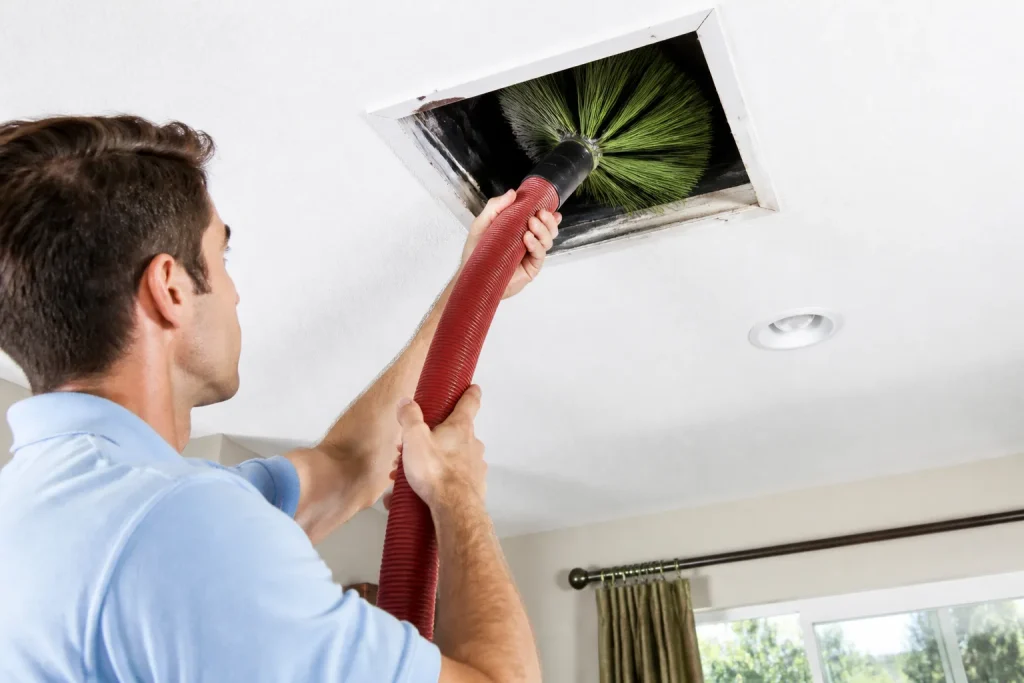
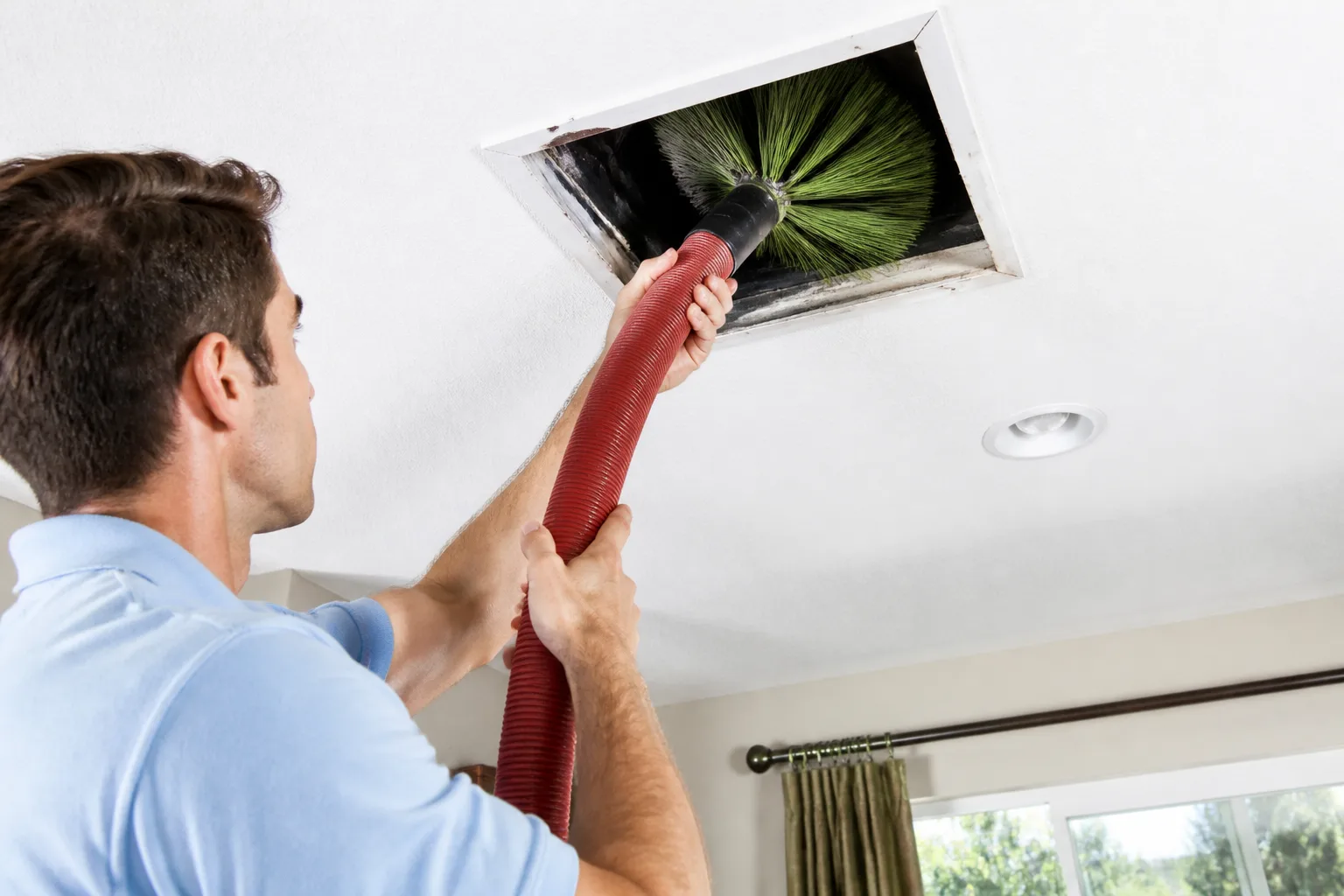
Pairing a Nikro vacuum with a Rotobrush rotary brush is the combination we rely on: the brush dislodges what’s bonded to duct walls, and the vacuum captures it. One without the other is half a job.
What should you ask a contractor about their equipment before booking?
Ask direct questions and listen for direct answers. A contractor who runs professional-grade equipment can tell you what they use, why, and how it’s configured for your home. Deflection, vague references to “industrial equipment,” or a pivot to price are all worth noticing.
Here’s a short list to bring to the call:
- What vacuum system will you use, specifically? A brand name and model type is a fair answer. “The good stuff” is not.
- Does it use HEPA filtration? Yes or no, then how many stages.
- How do you seal the system to maintain negative pressure? Listen for how they handle multiple registers and returns.
- Will you use a rotary brush on the duct walls? Source removal needs mechanical agitation, not just suction.
- Do you repair ductwork, or only clean it? If a run is disconnected or crushed, cleaning it accomplishes nothing. We clean it, and if it’s broken, we fix it.
- Can I see before-and-after photos of my own ducts? A yes here tells you a lot about how the company works.
One contractor answering all six without hesitation is a better sign than any coupon. For the full scope of what cleaning covers, see our page on air duct cleaning.
Truck-mounted or portable Nikro units: which fits a Lakewood home?
Portable units win more often than people expect in residential work. Truck-mounted systems have serious pull, but they need a hose run from the street to the house, and the length of that run costs pressure. In Lakewood, homes range from tight mid-century ranches to newer builds with longer, more complicated duct layouts, and the practical answer changes house to house.
A portable Nikro unit sits at the system, connects with a short, sealed run, and holds pressure better across a large or branching layout. It also reaches homes where a truck can’t park close or a hose run would cross too much ground. Truck-mounted equipment makes sense on some jobs, and a contractor who can explain which setup fits your home, and why, is showing you they’ve thought it through.
Either way, the equipment needs to be sized to the system. Undersized vacuum on a big system means weak pressure and a surface-level pass. Oversized pressure on a fragile older duct run can be a problem of its own. A technician who checks the layout before connecting anything is doing the job correctly.
Why does skilled operation matter as much as the equipment?
Commercial-grade equipment is only as good as the person running it. A Nikro system connected carelessly, run at the wrong pressure, or moved register to register without sealing the rest of the system will underperform a modest setup run properly. That’s the part of the job you can’t buy your way out of with a spec sheet.
What a trained technician does with the equipment is what determines the result:
- Maps the system first: supply runs, returns, branch points, and anything disconnected or crushed.
- Seals the system and works one section at a time, keeping negative pressure where the brush is working.
- Agitates duct walls with the rotary brush before pulling debris, rather than relying on suction alone.
- Watches filtration and airflow through the job and adjusts as the system loads up.
- Documents the condition of the ductwork and flags anything that needs repair. We have technicians with up to 9 years of experience, and knowing when to stop and repair is part of the training.
This is also why you want a company that handles Lakewood duct cleaning and repair together. A cleaner who finds a disconnected run can only write it on a report.
What should you watch for during the job to confirm negative pressure is really being used?
Watch the setup, not the sales pitch. Negative-pressure cleaning looks a certain way, and once you know what to look for, it’s easy to confirm the method is actually being applied. If you’d rather not monitor the visit yourself, call (844) 914-0778 and we’ll walk you through what to expect before we arrive.
Here’s what to observe:
- A sealed connection at the main trunk or return. The vacuum should couple to the system, not sit loose in the room.
- Registers handled one at a time, with the rest covered. If every vent is open while the vacuum runs, the pressure is bleeding out.
- No dust cloud in the living space. HEPA filtration means exhaust air comes out clean. Visible haze is a bad sign.
- A rotary brush going into the runs. You should see the agitation step, not just suction at the registers.
- Before-and-after photos of your own ducts. Ask to see them and ask what they show. Transparency is part of the process, and any contractor confident in their work will be glad to show you.
Lakewood’s dry air and long heating season push a lot of dust through a system over the course of a year, so if it’s been a while since the ducts were cleaned, the difference in what comes out is usually visible. That’s exactly why the photos matter.
When should you call a pro?
Call a professional when you notice a persistent musty smell from the registers, visible dust blowing out when the system starts, a recent HVAC replacement, or allergy symptoms that get worse indoors. If your dryer is running hot or taking longer than it used to, that’s a dryer vent cleaning issue and worth taking seriously. Dryer vent cleaning addresses a leading cause of residential fires, and we treat it as core work, not an add-on. For homes in Lakewood, we handle air duct cleaning, dryer vent cleaning, and duct repair as separate services, so the job you book is the job you get.
The Bottom Line
Nikro equipment is a functional specification, and knowing what it means gives you leverage. Ask what vacuum system a contractor uses, whether it’s HEPA-filtered, how they seal the system, and whether they agitate duct walls with a rotary brush. Watch the setup when they arrive. Ask for photos of your own ducts. Anyone who runs professional-grade equipment and knows how to operate it will answer those questions without flinching, and the ones who deflect have told you something useful.
We run Nikro and Rotobrush systems, use Abatement Technologies equipment for heavier contamination work, and service systems built on Honeywell, Aprilaire, and Guardsman platforms. We clean it, and if it’s broken, we fix it. If you’re in Lakewood and need help, Lakewood Duct Cleaning offers free estimates. Call (844) 914-0778. We answer 24/7. Fast dispatch from 7am to 7pm, Sunday through Friday.
Related services in Lakewood
Frequently Asked Questions
Yes, by a wide margin. A Nikro industrial vacuum is built to hold negative pressure across a sealed duct system and filter exhaust through HEPA media, while a shop vac moves far less air and can send fine dust back into the room. The equipment class is different, and the results follow.
Yes. Watch for a sealed connection at the main trunk or return, registers handled one at a time with the others covered, no visible dust in the living space, and a rotary brush going into the runs. If the vacuum sits loose in the room with every vent open, the method isn’t being applied.
Often better for residential work. A portable unit connects directly to the system with a short, sealed run and holds pressure more reliably across large or branching layouts. A truck-mounted system can work too, but long hose runs from the street cost pressure. The right choice depends on your home’s layout.
Cleaning is enough when the ductwork is intact and the issue is buildup. If a run is disconnected, crushed, or leaking, cleaning won’t fix the problem, and the ductwork needs repair. A technician who inspects the system before cleaning can tell you which applies. Call (844) 914-0778 for a free estimate and we’ll take a look.
Written by the team at Lakewood Duct Cleaning.
Need Air Duct Cleaning Help?
Call Lakewood Duct Cleaning - licensed & insured, with free written estimates in Lakewood.
(844) 914-0778