
Last updated November 15, 2026
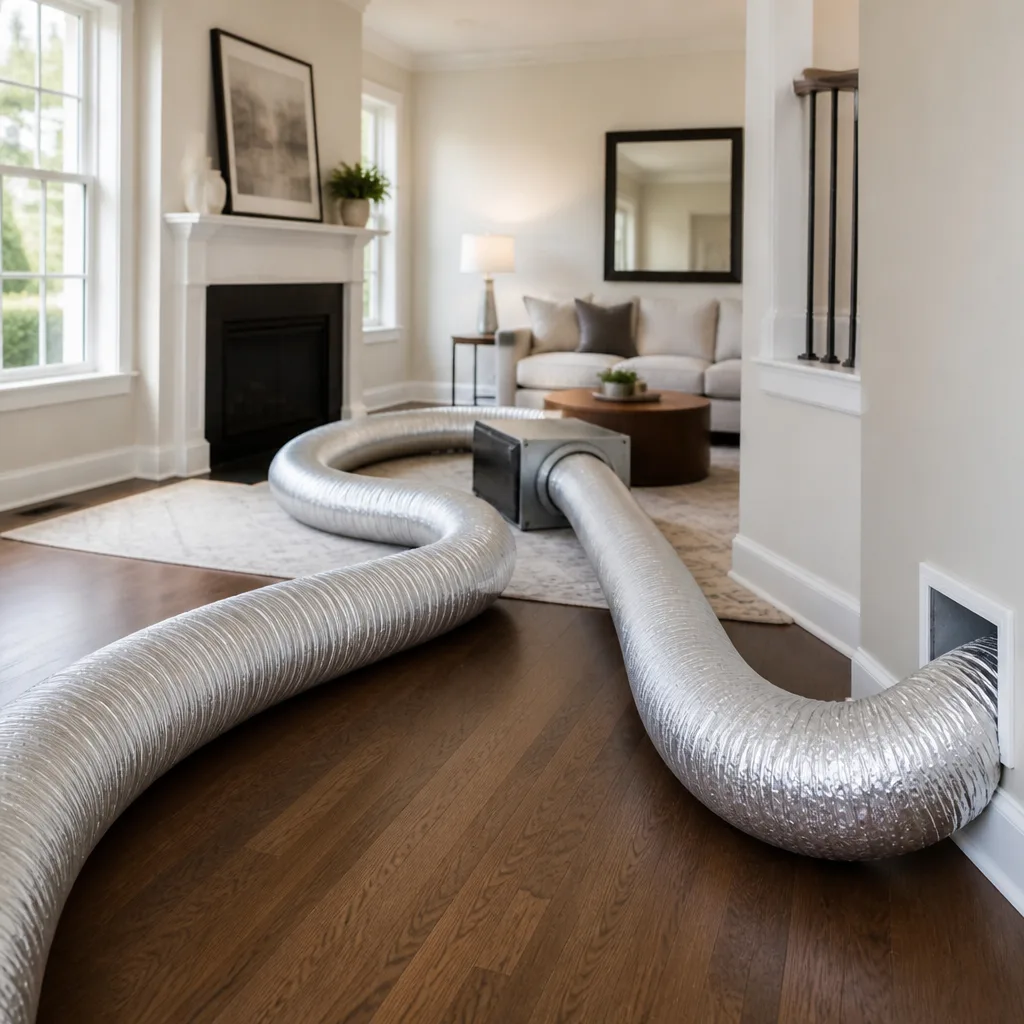 Whole-home duct cleaning
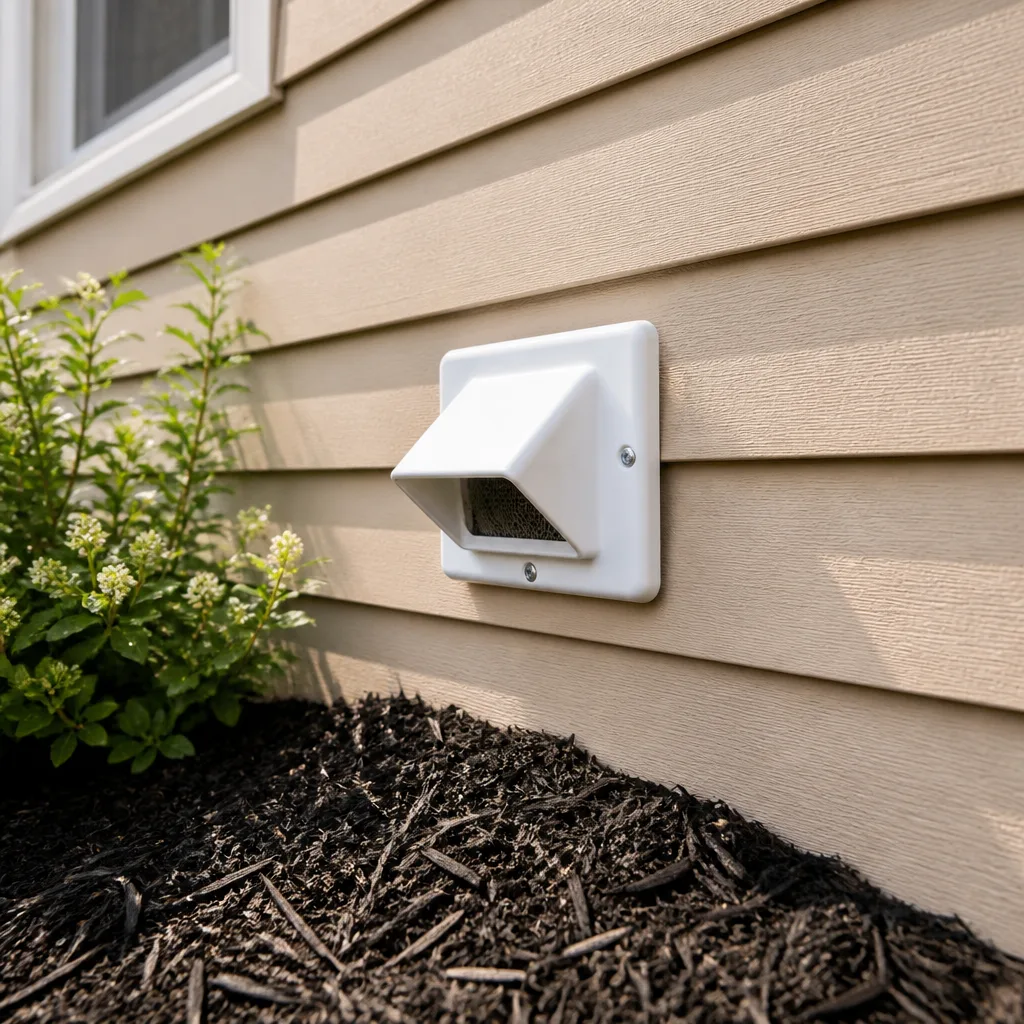 Dryer vent cleaning
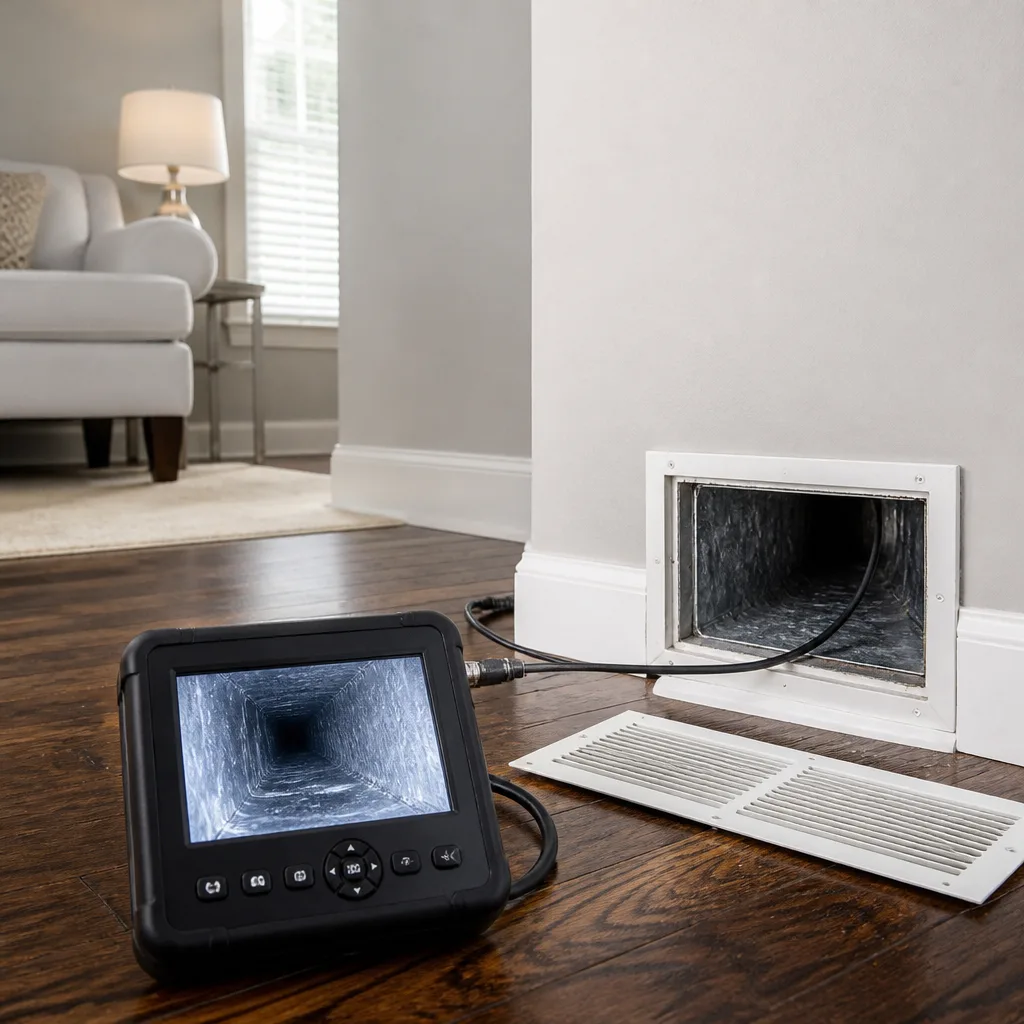 Camera inspection
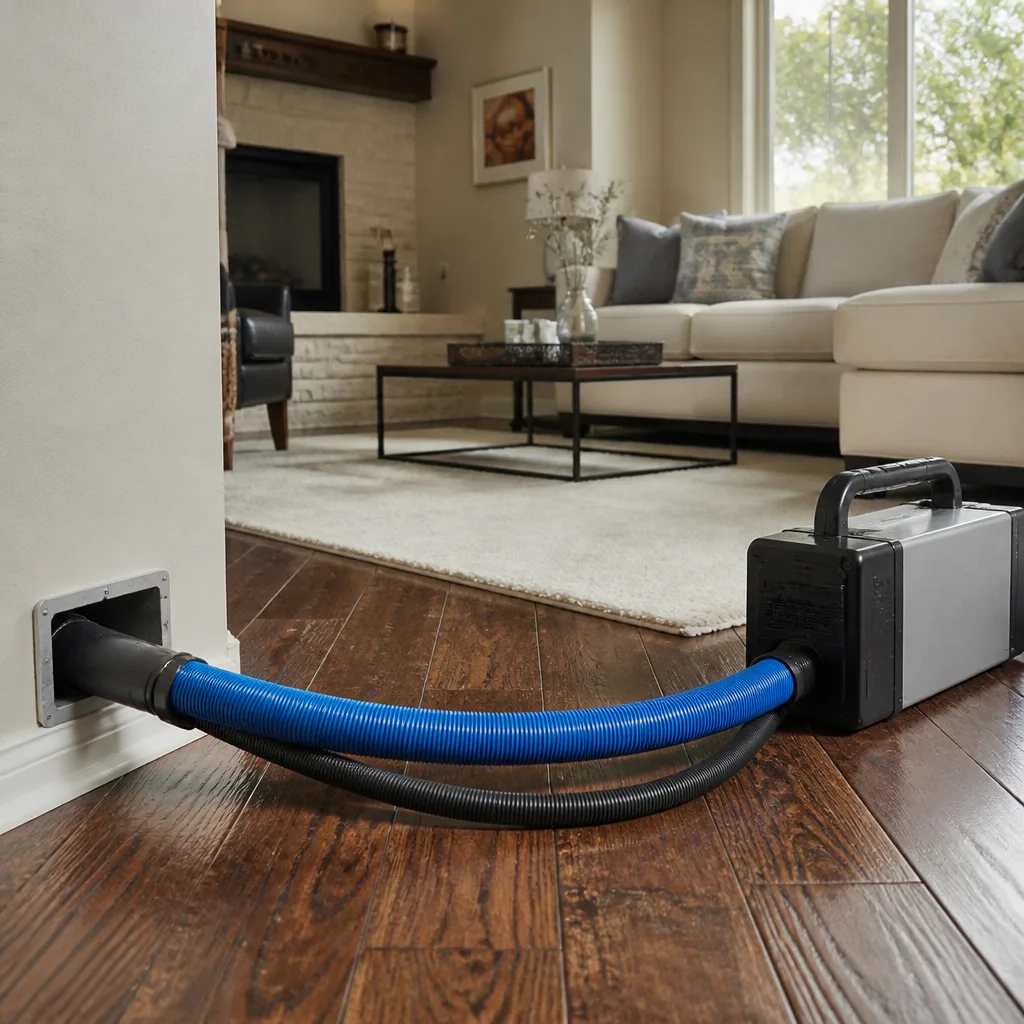 Sanitizing & deodorizing
Whole-system duct and dryer vent check with before-and-after photos - you see exactly what came out of your vents
That "$99 whole-house special" is a bait ad - the real number appears once they are in your hallway, or the "clean" is a shop-vac at the register. We photograph the inside of your ducts before and after instead.
Air Duct Cleaning Troubleshooting in Lakewood: Common Problems and How to Fix Them
If your home still smells musty two weeks after a professional duct cleaning, the technician likely cleaned around the problem instead of through it. Most duct problems people call us about in Lakewood aren’t cleaning failures at all. They’re diagnostic failures, where someone treated a symptom before identifying the duct condition causing it. A collapsed run of flex duct, a joint that pulled apart behind a wall, or insulation that came loose inside a plenum will keep producing dust and odors no matter how many times the system gets vacuumed. This guide teaches you to read your system’s signals: airflow, smell, dust patterns, and timing. By the end you’ll know whether you’re looking at leftover debris, a mechanical defect, or the wrong service entirely, and what to do about each.
Quick Answer
Post-cleaning problems usually fall into one of three buckets: normal settling that clears in 24 to 72 hours, contamination left behind because the cleaning was too shallow, or a physical duct defect (collapsed flex, disconnected joint, failed insulation) that cleaning can’t fix and only repair can. The fastest way to tell them apart is timing plus smell plus airflow. If dust returns within days and airflow is weak in specific rooms, suspect a defect, not dirt.
Styles & brands we work with
- Whole-home duct cleaning
- Dryer vent cleaning
- Camera inspection
- Sanitizing & deodorizing
Table of Contents
- Normal post-cleaning symptoms vs. warning signs
- How to tell a cleaning failure from a pre-existing duct defect
- Why dust comes back, and where it’s coming from
- How Lakewood’s climate changes the troubleshooting logic
- Dryer vent problems that get misread as duct problems
- When you need repair, not another cleaning
- A step-by-step way to diagnose your own system
- How to choose who to call in Lakewood
Normal Post-Cleaning Symptoms vs. Warning Signs
A freshly cleaned duct system is not instantly spotless air. The rotary brush work used on most systems disturbs debris clinging to duct walls, and a small amount of that loosened material can travel through the supply runs in the first day or two. So some short-lived symptoms are expected. What matters is the pattern.
Normal for 24 to 72 hours after professional cleaning:
- A faint dusty or “dry” smell the first time the system runs after the work
- A small puff of dust at supply registers on the initial cycle
- A slight metallic or clean smell if the ducts sat closed for a while
- Clogged furnace filter by the end of the first week (replace it once)
Warning signs that something is wrong:
- A musty, sour, or “wet basement” smell that persists past a week
- Visible dust settling on surfaces within three to five days
- Weak airflow in specific rooms while others are strong
- Whistling or rushing sounds at a register that weren’t there before
- Any odor that gets stronger when the heat or AC kicks on
The smell test is the single most useful diagnostic you have. Dust is dust. A persistent musty smell after cleaning almost always means moisture or organic growth somewhere in the system that the cleaning did not reach: a damp plenum, condensate that’s been sitting, or insulation that stayed wet. In a high and dry place like Lakewood, that points to a source of water, not ambient humidity. If the smell hangs around past 72 hours, stop cleaning and start hunting for the wet spot.
How to Tell a Cleaning Failure from a Pre-Existing Duct Defect
This is the distinction that saves Lakewood homeowners money. A cleaning failure means the equipment or technique didn’t reach the contamination. A duct defect means the duct itself is broken, disconnected, collapsed, or uninsulated, and no amount of vacuuming will fix it. Cleaning moves the problem around; repair removes the problem.
Here’s how the two present differently:
- Cleaning failure: Dust everywhere, but roughly uniform. Airflow is strong at all registers. The smell is a general dusty smell, not localized. Symptoms improve gradually after the cleaning, then plateau.
- Duct defect: Symptoms are concentrated. One or two rooms run weak. Dust streaks from one register. A musty or “outside air” smell in a specific area. A whistling noise at a joint. Symptoms come back fast and never fully clear.
If you’re seeing the second pattern, the question isn’t “who do I call to clean again.” It’s “who can find and fix the break.” A technician with rotary-brush and HEPA vacuum capability can clean all day and still leave a disconnected flex run venting attic air into a bedroom. The fix is diagnosis plus repair.
The most common defects we run into:
- Collapsed flex duct where a run was bent too tightly during install or crushed by stored items in an attic or crawlspace.
- Disconnected joints where tape or mastic failed and a run is now dumping air into a wall cavity or unconditioned space.
- Failed internal insulation where the liner has come loose and is either blocking the air path or shedding fibers into the airstream.
- Gaps at the supply plenum, where the main trunk meets the furnace and small openings pull in unfiltered air from the mechanical space.
- Return grille bypass where the return is pulling air from an attic or garage instead of the living space.
Notice that only some of these are “dirt” problems. Others are construction problems. That’s why a cleaning-only company can leave you frustrated: their scope ends before the real issue begins.
Why Dust Comes Back, and Where It’s Actually Coming From
When dust returns to a Lakewood home days after cleaning, the cause is almost never “the whole system is contaminated again.” Contamination doesn’t rebuild across a whole house in a week. What does happen is that the cleaning removed settled dust from the duct walls, but a persistent source kept feeding new dust into the airstream. You cleaned the bowl. You didn’t fix the leak.
Look at where the dust concentrates. That tells you the source.
- Dust streaks from one specific supply register. Suspect a disconnected or cracked run feeding that register, or a broken seal at the boot where it meets the floor or wall.
- Dust in every room, evenly. Suspect supply plenum gaps at the furnace, a loose access panel, or an oversized return pulling unfiltered air from an attic, garage, or crawlspace.
- Dust mostly near the return grilles. Suspect return-side bypass, a saturated filter that isn’t catching fine particulate, or a return duct with failed insulation.
- Dust that’s dark or greasy. Strongly suspect a leak downstream of the air handler pulling air from a mechanical closet, or a nearby source of smoke or cooking exhaust being drawn back in.
Two mechanical details matter here. First: every gap in the supply side is a pressure leak, and pressure leaks pull unconditioned, unfiltered air toward the living space. Second: a filter that’s too cheap, too old, or installed on the wrong side of the air handler can’t capture fine particles, so the dust you see is dust that never got caught in the first place. In our experience troubleshooting systems across Lakewood, we’d bet on a plenum gap or a return bypass in at least half of fast-dust-return cases.
How Lakewood’s Climate Changes the Troubleshooting Logic
Duct problems in Lakewood don’t follow the same pattern as duct problems in a humid climate or a sea-level city. Two conditions shape what you should expect.
High-altitude dryness. The dry air here pulls moisture out of building materials, including MDF, drywall, and old duct sealants. Over time that can cause taped joints to lift, mastic to crack, and insulation facing to peel. That’s why we see more joint failures in Lakewood than in wetter places: the duct isn’t wet, but the sealants dried and gave up. The practical translation is that your seam and joint integrity is likely a bigger variable than your dust level. If you’re troubleshooting, look at the seams first.
Wildfire smoke seasons. Smoke particles are fine enough to pass through standard filters and small enough to lodge deep in duct liners and on the dust already clinging to duct walls. When smoke season follows months of ordinary dust accumulation, the fine particles stick to the rougher surfaces inside the ductwork. That’s why a system that “was fine last year” can smell smoky months after the sky clears. Cleaning helps, but the more useful step is checking that the return system and filter housing are actually sealed, because a leaky return is a direct path for outside smoke to enter the living space.
What this means for troubleshooting:
- Don’t assume a recurring smell is biological. In a dry climate, it’s more often a pressure leak drawing in attic or mechanical-space air, or a sealant failure letting outdoor air in.
- Smoke season dust and odor calls for verifying your return-side integrity, not just cleaning the supply runs.
- If your home uses Honeywell or Aprilaire filtration equipment, that equipment is only as effective as its housing seal. A torn filter gasket undoes the whole system.
- Old duct sealant is worth replacing before you bother with another cleaning. If the tape is failing, the ducts aren’t sealed.
Contamination added by dry, smoky air is layered. Cleaning strips one layer; sealing the system prevents the next one. If you’re going to spend money, spend it on whatever gets you sealed first.
Dryer Vent Problems That Get Misread as Duct Problems
Here’s a diagnostic mistake we see repeatedly: a homeowner notices dust, moisture, or a smell near the laundry area and assumes the HVAC ductwork is the culprit. Often it’s the dryer vent. The two systems share a wall, a floor cavity, or a mechanical closet, and the symptoms blur together.
The dryer vent is worth its own troubleshooting section because the consequences of a badly clogged one are more serious than dusty ducts. A vent packed with lint restricts airflow, overheats the dryer, and is a leading cause of residential fires. It is a safety matter, not a comfort one.
Signs the problem is your dryer vent and not your air ducts:
- The dryer takes noticeably longer to dry a load than it used to.
- The laundry closet is humid or steamy after a cycle.
- Lint is accumulating around the outside vent hood or on the ground beneath it.
- The dryer itself gets hot to the touch on the top or cabinet.
- There’s a faint burning or hot-rubber smell during drying.
- Airflow at the exterior vent hood feels weak when the dryer is running.
Any of those signals means the dryer vent is due for professional cleaning. Leave it alone and you’re betting on a system that’s gradually losing its ability to cool the dryer. Dryer vent cleaning in Lakewood is one of our three core services for exactly this reason: it’s not an upsell tacked onto duct work, it’s a separate safety service that regularly gets overlooked.
One troubleshooting note: don’t confuse lint smell with mold smell. Lint buildup smells dry and slightly burnt. Mold smells musty and earthy. If the smell is musty, you’re likely looking at moisture in the wall cavity from a crushed or disconnected vent pipe, and that needs professional diagnosis, not a cleaning.
When You Need Repair, Not Another Cleaning
At some point troubleshooting stops being about cleaning. You’ve checked the filter, you’ve had the ducts cleaned, the smell is gone for three days, then it’s back. That’s the point to stop cleaning and start repairing. A second cleaning treats a symptom. Repair addresses the cause.
The situations that call for repair capability, not another pass with the vacuum:
- Airflow that’s weak at one or two registers despite cleaning. The run feeding them is likely crushed, kinked, or disconnected.
- Rushing or whistling sounds at a joint. A pressure leak is pulling air from the wrong place.
- A musty smell that won’t clear. Either insulation has held moisture, or the system is pulling attic or crawlspace air.
- Visible dust streaks from one supply boot. The seal at the boot has failed.
- A collapse you can see in an attic or crawlspace. Flex duct is easy to crush and needs to be re-run.
This is the practical reason we carry Air Duct Repair as a core service. Competitors who only clean have to refer you out, which means your troubleshooting stretches over weeks and two invoices. Our technicians can diagnose and fix compromised ductwork on the same visit, with Abatement Technologies equipment and a full air-quality system toolkit in play. If the fix is a re-run of flex duct, sealing a joint, or replacing loose insulation, that work happens while we’re already in the system. You’re not cleaning it, waiting two weeks, cleaning it again, and finally calling someone else to find the actual problem. We clean it. If it’s broken, we fix it.
What to expect from a repair visit:
- Airflow testing at registers to isolate which runs are performing and which aren’t.
- Visual inspection of accessible ductwork in the attic, crawlspace, or basement.
- Sealing gaps at the supply plenum and return bypass points.
- Repairing or re-running compromised runs, replacing loose fittings, and confirming airflow after each fix.
- A before-and-after look at the repair, so you can see what was fixed and what was checked.
A Step-by-Step Way to Diagnose Your Own System
Before you call anyone, you can narrow the problem down yourself. This sequence takes about fifteen minutes and gives you a clear picture to describe on the phone. It won’t tell you exactly what’s wrong, but it will tell you which category of problem you’re likely facing.
- Change the filter. Start with a fresh filter of the correct rating for your system. If the old one was heavily loaded, that alone may explain half the symptoms you’re seeing.
- Do the register airflow check. Turn the fan to “on” and hold a piece of tissue or your hand at each supply register. Note which rooms have noticeably weaker airflow. Write them down.
- Do the return check. Hold a tissue at each return grille. Return grilles should pull strongly and evenly. A weak return, or a return pulling air with a strange smell, is a red flag.
- Sniff each register with the heat or AC running. Note which rooms smell different. A localized smell strongly suggests a specific run with a defect.
- Check the exterior dryer vent while the dryer is running. If airflow is weak at the hood, the dryer vent is due for cleaning.
- Look at visible ductwork in the attic, basement, or crawlspace. Look for crushed flex runs, disconnected joints, loose tape, wet insulation, or runs that got bent too tightly at a fitting.
- Write down the timing. When did the symptoms start, and did anything (cleaning, HVAC work, a home purchase, a wildfire season) precede them? That timeline is diagnostic.
When you call, you can say “room two and room three have weak airflow, room one smells musty when the heat kicks on, and the sight line to the attic shows a crushed run.” That saves a visit and points the technician to the right tools immediately. It also makes it much harder for anyone to sell you a cleaning you don’t need.
How to Choose Who to Call in Lakewood
The reason duct work has a reputation problem is simple: the cheapest coupon offer often becomes a much larger invoice once the technician is on site. Your defense is asking three questions before you book.
- Do you use rotary-brush and HEPA equipment? A shop vac and a hose isn’t professional duct cleaning. Rotobrush rotary-brush systems and Nikro HEPA vacuums are the tools that dislodge wall debris and capture it instead of redistributing it through the house.
- Can you repair duct defects on the same visit? If the answer is no, you may end up paying twice: once for cleaning, once for the repair after someone finds the actual problem.
- Will you give me one flat price before starting? A written estimate that covers the full system, agreed before the work starts, with no per-vent pricing, protects you from the bait-and-switch pattern. Ask to see before-and-after photos of your own system, not stock images.
One more useful filter: ask what equipment they use for contamination-level situations. Abatement Technologies gear and familiarity with systems built on Honeywell, Aprilaire, or Guardsman platforms tells you the technician has worked in air-quality contexts beyond routine dust removal. And if they can’t tell you the last time they cleaned a dryer vent, that’s a capability gap worth noting.
Common Mistakes to Avoid
- Cleaning twice and calling it a diagnosis. If the first cleaning didn’t fix the smell, the second won’t either. The problem is almost certainly a duct defect, not remaining dirt. Ask for airflow testing before you book another clean.
- Buying a cheap “per-vent” coupon. Per-vent pricing encourages fast, shallow work so the crew can move to the next call. Whole-system flat pricing, agreed in writing, is the honest version of the same job.
- Assuming high-altitude dryness means no moisture problems. Dry air can still hide a plumbing leak, a condensate drip, or a disconnected dryer vent behind a wall. A musty smell in a dry Lakewood home points at a specific wet source, not general dampness.
- Skipping the return side. Homeowners and budget crews often clean supply runs and ignore returns and the plenum. Most fast-returning dust comes from the return side.
- Treating dryer vent cleaning as an upsell. A clogged dryer vent is a fire risk, not a comfort upgrade. It deserves its own scheduled cleaning.
- Ignoring the smell after wildfire season. Smoke seasons leave fine particles that lodge in duct liners. If the smell doesn’t clear after a few months, get the return system checked for leaks and the filter housing checked for gaps.
- Ignoring a whistle or a rush. A whistling joint is a pressure leak, and pressure leaks pull attic or crawlspace air into the living space. Get it sealed before you bother cleaning again.
See the difference
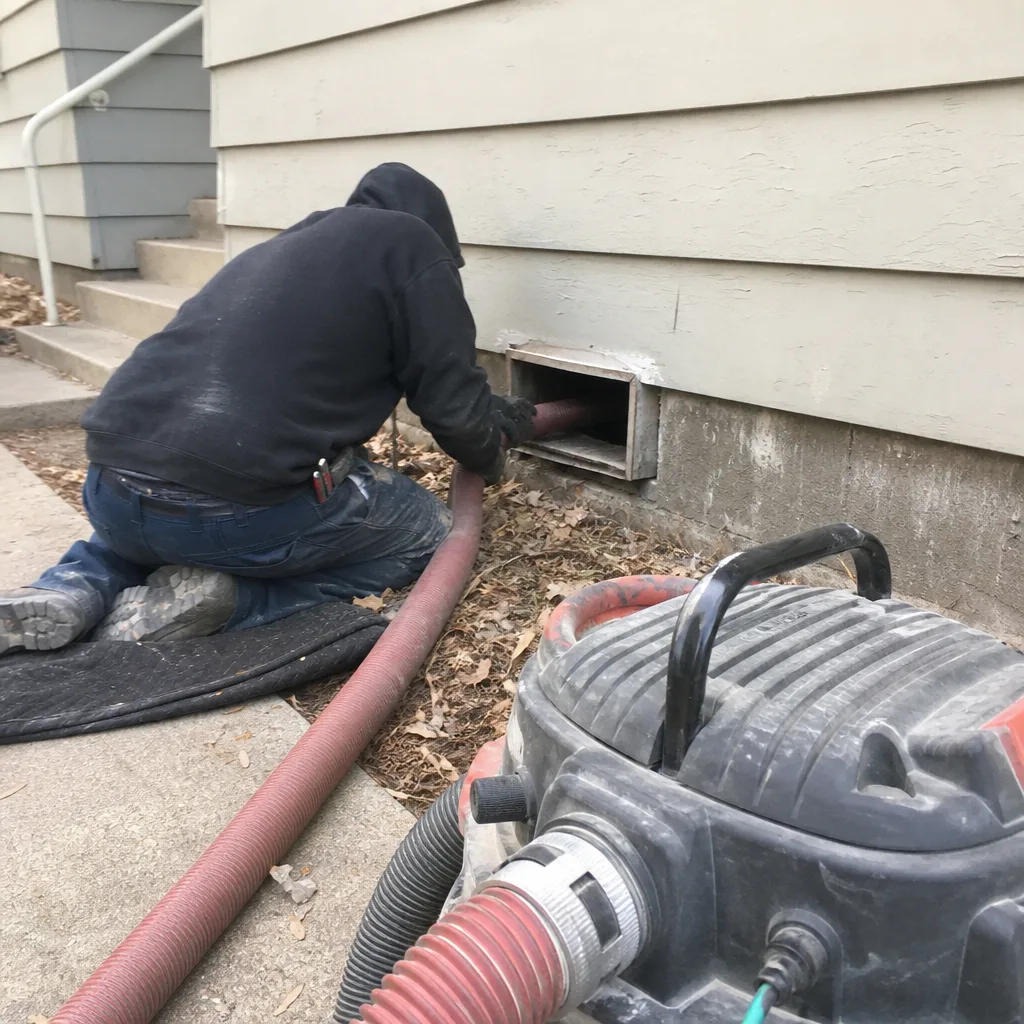 Before
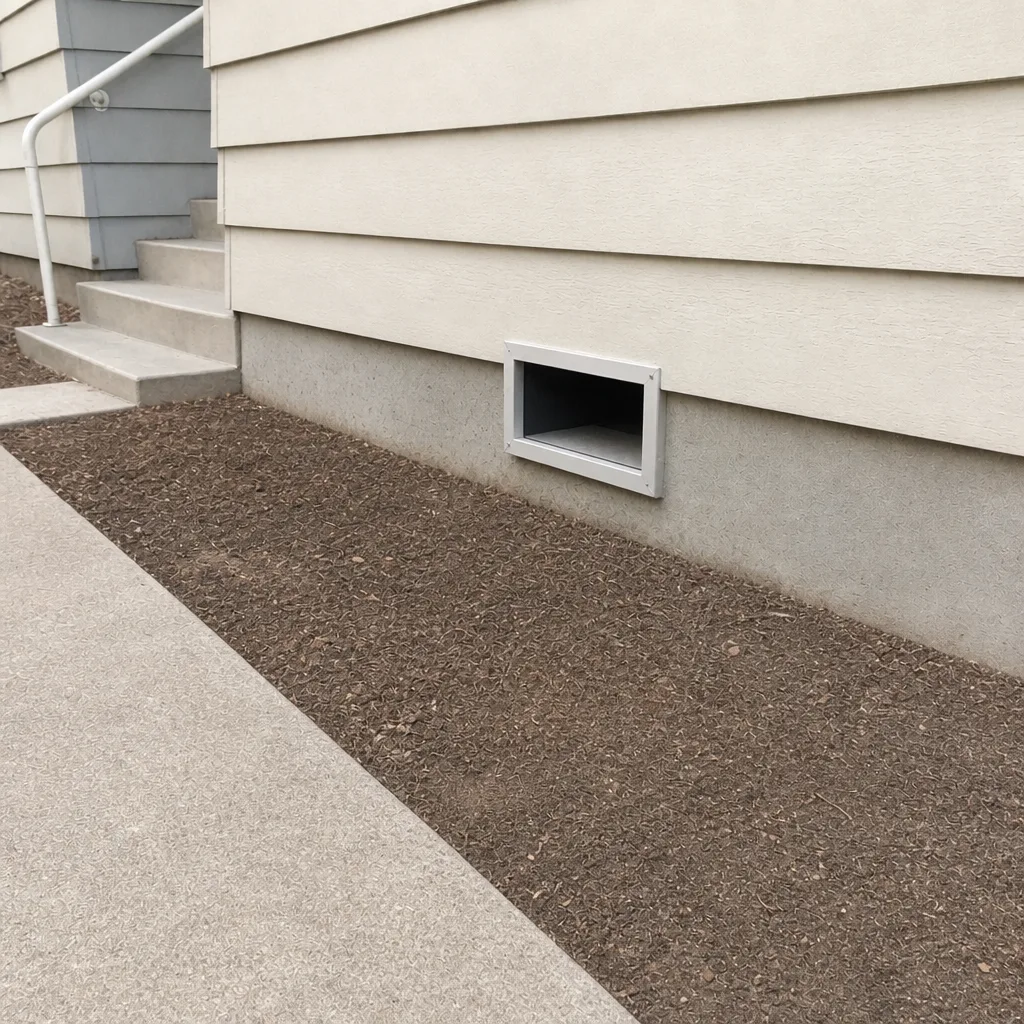 After
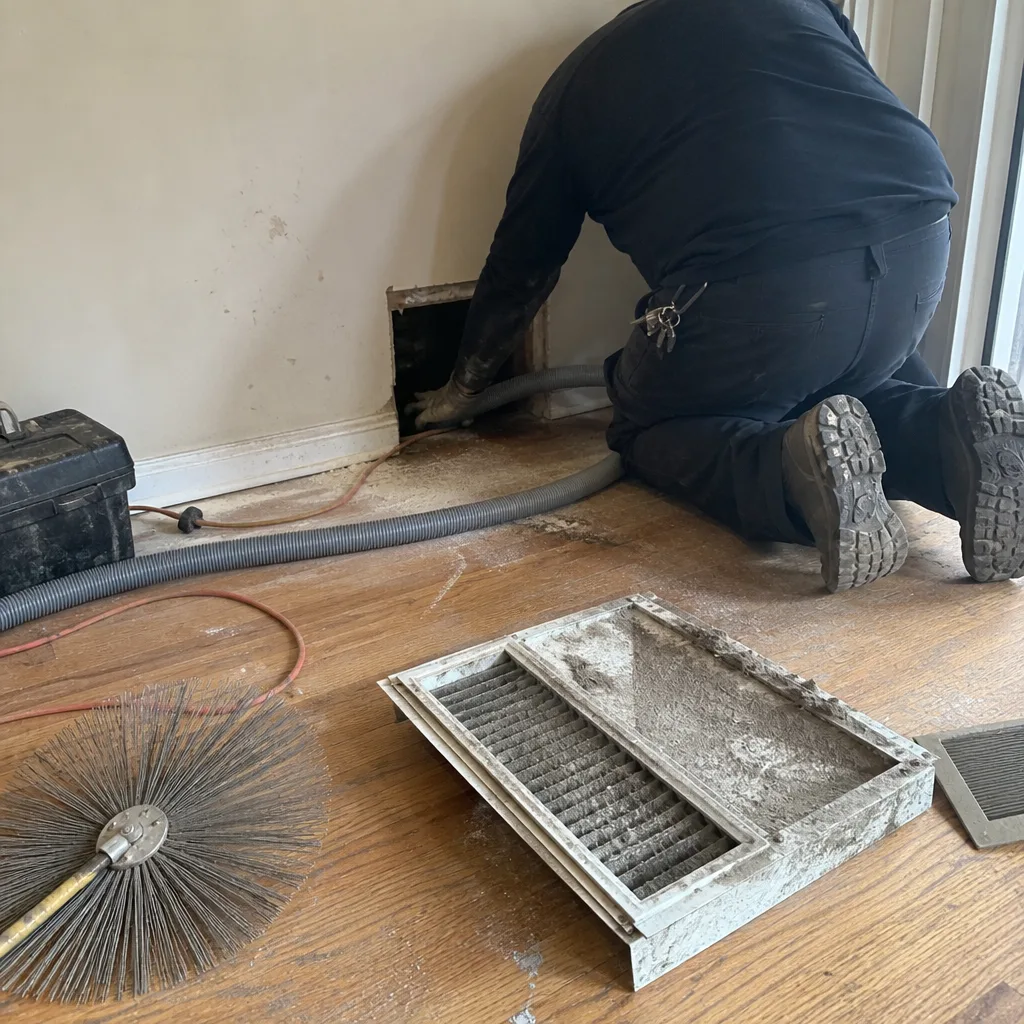 Before
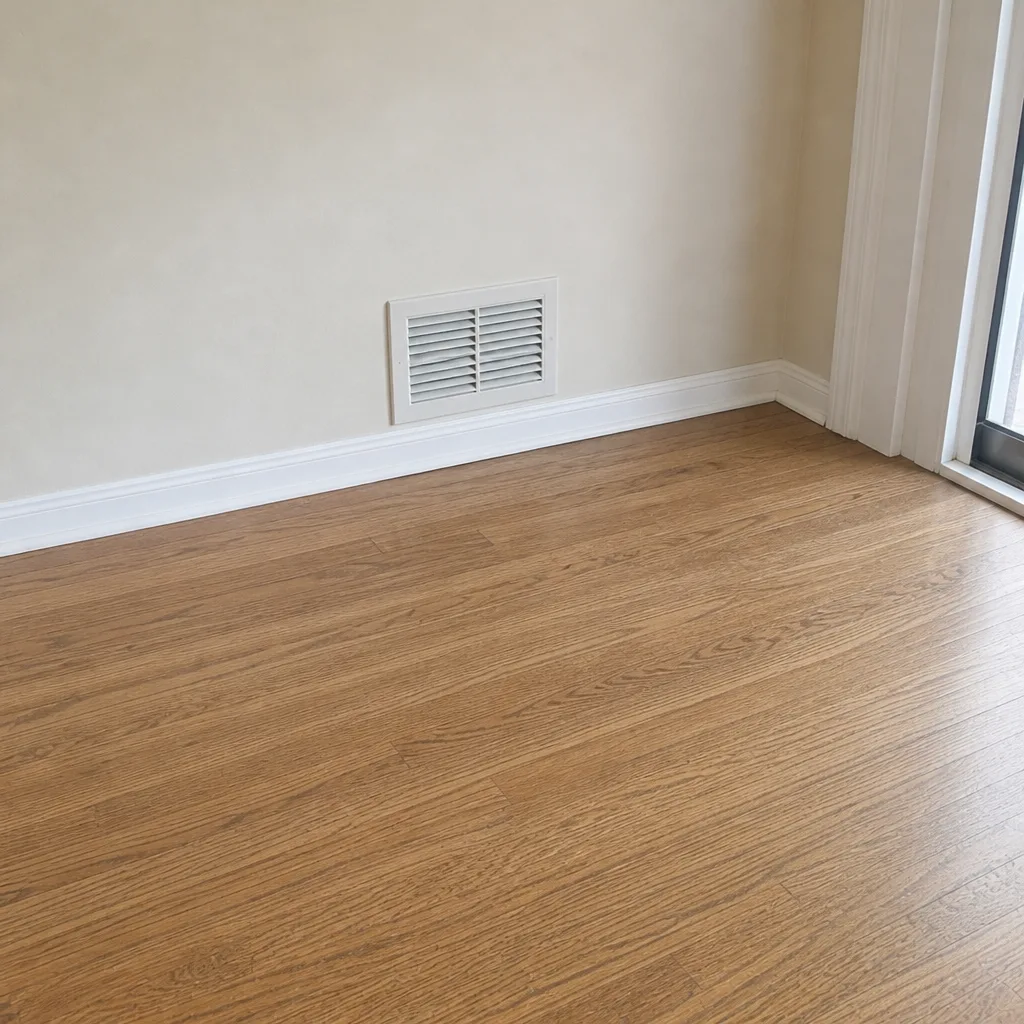 After
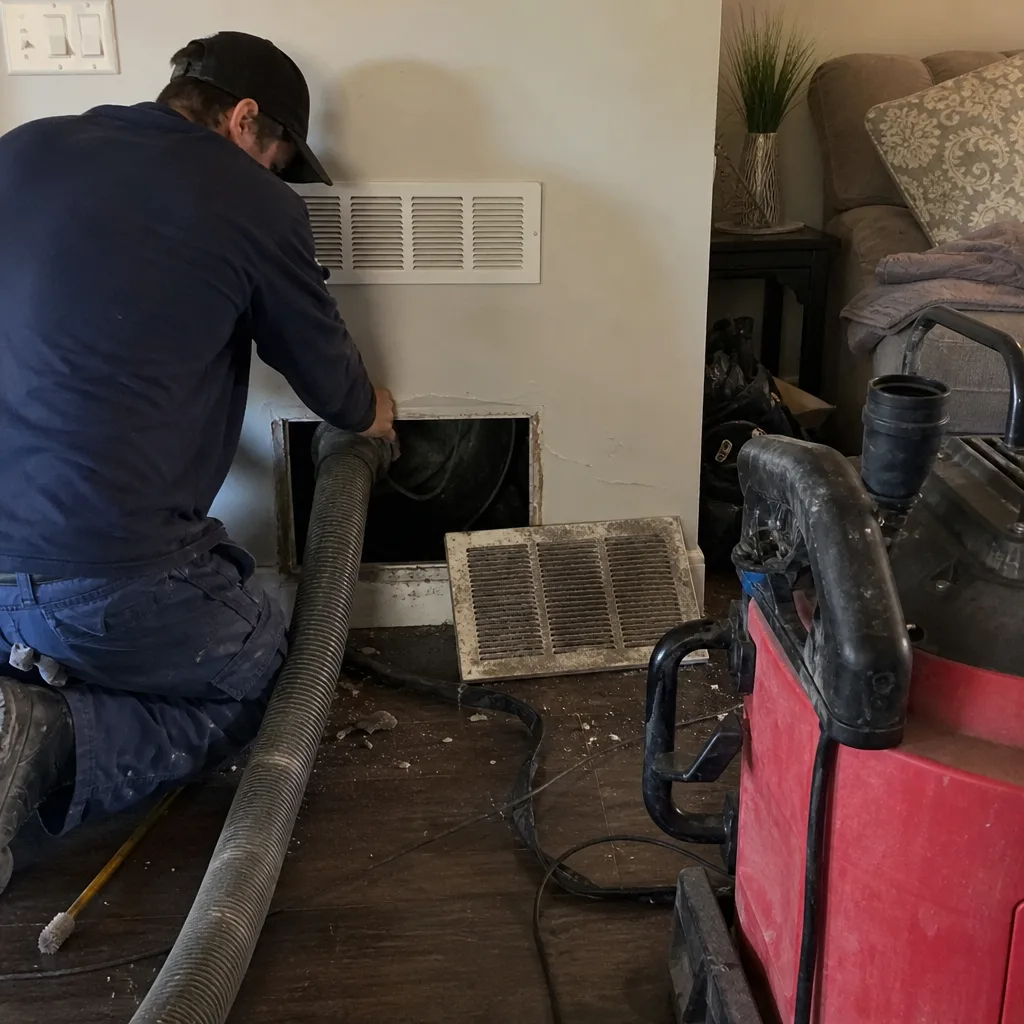 Before
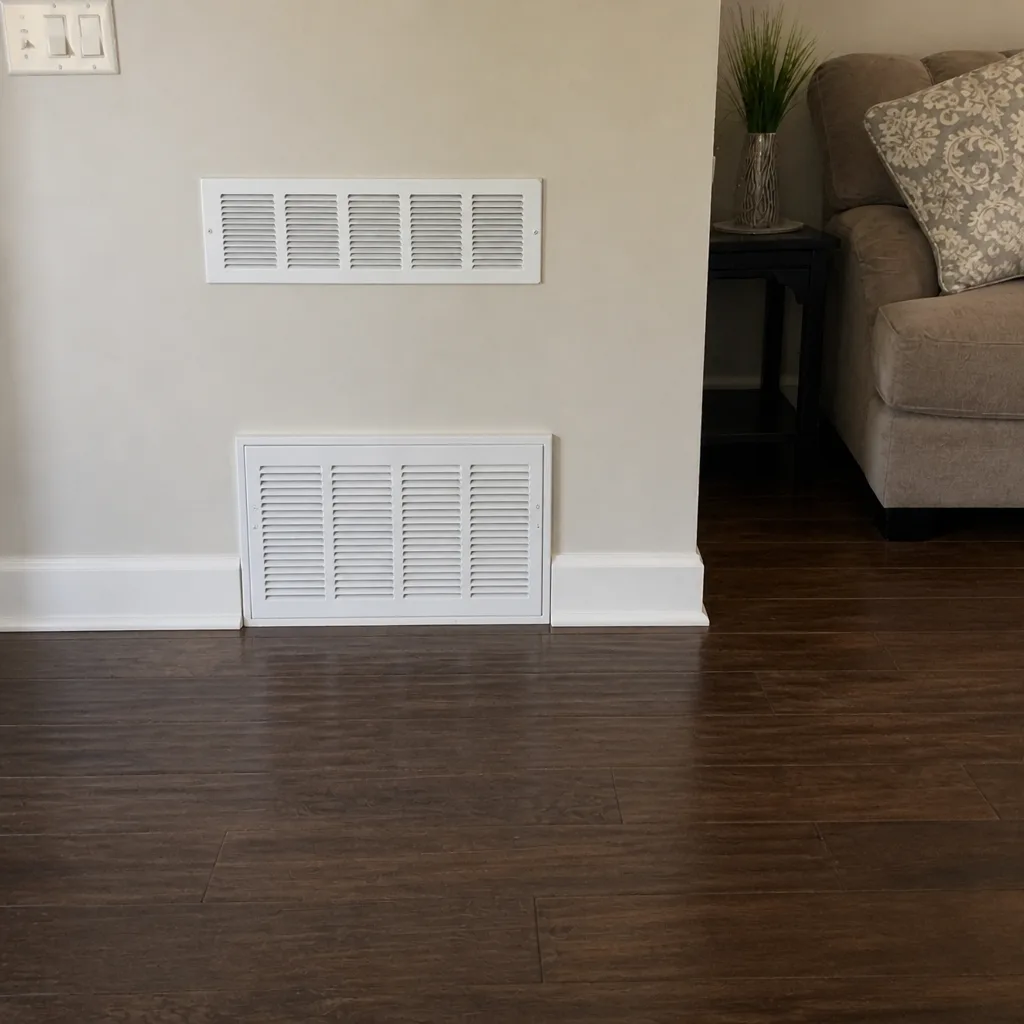 After
When to Call a Professional
Call a professional when the smell persists past 72 hours, when airflow is weak in specific rooms, when you find a crushed or disconnected run, or when the dryer runs hot or takes longer to dry. Call sooner if you smell burning near the laundry area. Also call if you’ve had a cleaning in the last year and the same symptoms returned: that pattern points to a duct defect, and you need someone who both cleans and repairs. Skilled troubleshooting at home only goes so far, because the last two steps (checking inside a plenum, opening a section of ductwork, tracing a return bypass through framing) need professional tools and access. Lakewood Duct Cleaning offers free estimates in Lakewood; a written estimate sets the price before work begins. Call (844) 914-0778 and describe what you found. Our technicians have up to 9 years of experience and can tell you from your description alone whether the likely fix is a cleaning, a repair, or a dryer vent service.
Frequently Asked Questions
Two to three days. Expect a faint dusty smell on the first cycle, a small puff of dust at supply registers, and a furnace filter that clogs faster than usual in the first week. Replace that filter once and the system should run clean after that. If dust continues to settle on surfaces or a smell lingers past 72 hours, the cause is a duct defect or an incomplete cleaning, not normal settling.
A musty smell after cleaning means moisture is still in the system somewhere the cleaning didn’t reach, or the return side is pulling damp attic or crawlspace air. In Lakewood’s dry climate, that almost always indicates a specific water source (a plumbing leak, condensate drip, loose insulation that got wet, or a failed seal) rather than ambient humidity. Cleaning around it won’t stop it. The fix is finding the source and repairing the seals or the run.
Because the cleaning removed settled dust but a source kept feeding new dust into the airstream. The most likely culprits are gaps at the supply plenum, a return grille bypass pulling attic air, or a disconnected run. Look at where dust concentrates: one room means one bad run, every room means a plenum or return problem. Repair and sealing fixes it; a second cleaning does not.
Pricing depends on the number of systems, the layout, and whether repair work is involved. We give one flat price per system, agreed in writing before the work starts, so a coupon price can’t become a much larger invoice on site. Call (844) 914-0778 for a free estimate. If your problem is a duct defect, we’ll tell you that on the call and price the repair, not a repeat cleaning.
Because they’re often based on per-vent pricing or a coupon that doesn’t cover the full system. That business model depends on finding problems on site and upselling them. A whole-system price, agreed in writing, is the honest version of the same job. When you compare quotes, compare what’s covered, not just the headline number. Call (844) 914-0778 if you want to talk through the difference.
Altitude itself doesn’t create dust, but the dry air here does cause duct sealants, tapes, and insulation facing to dry out and fail faster. That’s why joint failures and disconnected returns are more common in Lakewood than in wetter places. The practical advice is to check your seams and joints as part of any troubleshooting, because a dry-failed joint is often the real cause of a recurring dust or smell problem.
Not effectively, and not safely on the return side. A shop vac can’t reach the full wall surface of the ductwork, can’t pull debris out of return plenum cavities, and will redistribute fine particulate into the room instead of capturing it. Professional rotary-brush and HEPA vacuum systems are built for that job. If you want to know what’s actually inside, use the diagnostic steps above, then call for a professional visit.
The Bottom Line
Most post-cleaning duct problems in Lakewood are diagnostic failures, not cleaning failures. Cleaning removes dirt; it doesn’t fix a collapsed flex run, a disconnected joint, or a return bypass. Use the timing-plus-smell-plus-airflow rule to sort normal settling (24 to 72 hours) from defects that need repair. Check the return side and the plenum first, because they’re the source of most fast-returning dust. And respect the dryer vent as its own safety system, because a clogged vent overheats the dryer. When in doubt, call for a professional estimate that diagnoses first and cleans or repairs second. That’s the sequence that keeps you from paying twice.
If your home still smells musty two weeks after a cleaning, or dust returns within a week, the cleaning wasn’t the answer. Call (844) 914-0778 for a free estimate and describe what you’ve observed. We clean it. If it’s broken, we fix it. Take a look at air duct cleaning to see how we approach a full system, or review dryer vent cleaning if your dyson signs point to the laundry side. For a broader view of how we handle Lakewood homes, you can start with Lakewood Duct Cleaning. We answer 24/7, with fast dispatch from 7am to 7pm, Sunday through Friday.
Written by the team at Lakewood Duct Cleaning.