
Last updated November 15, 2026
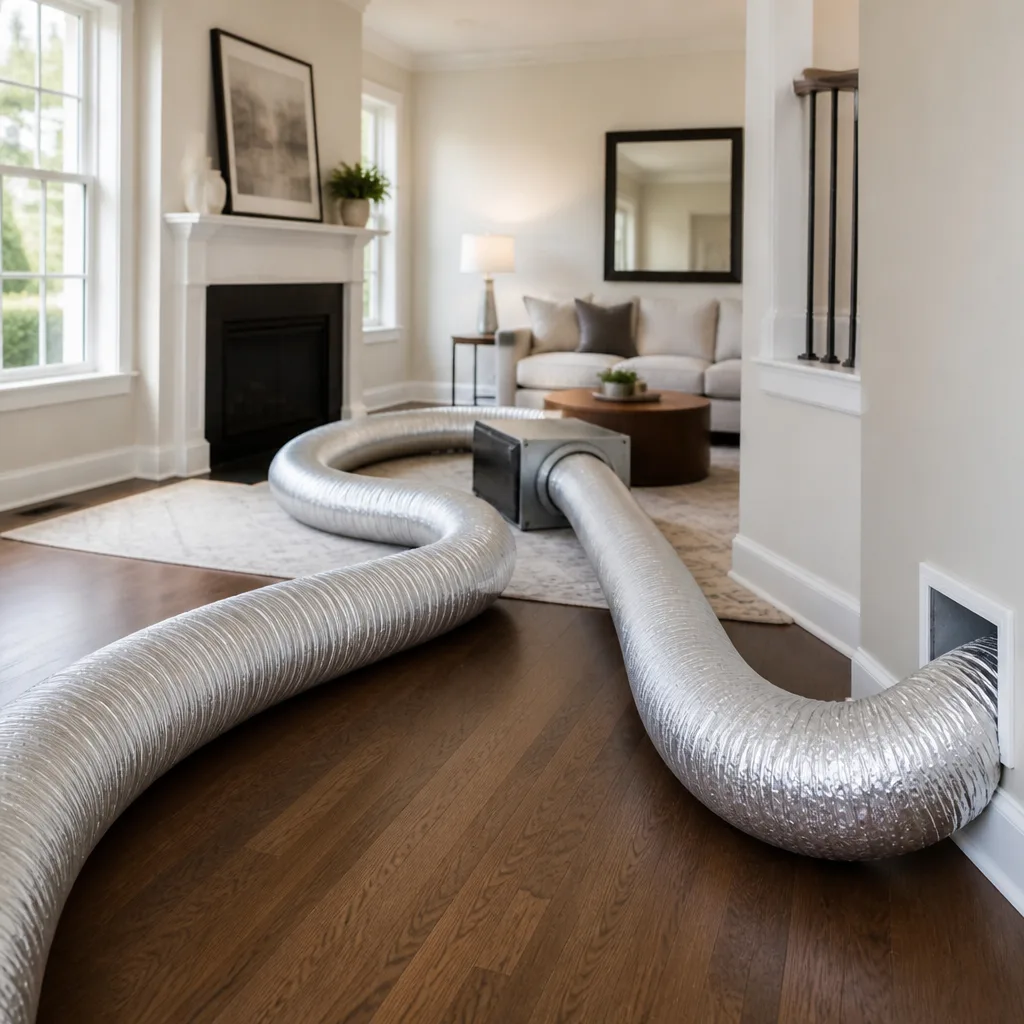 Whole-home duct cleaning
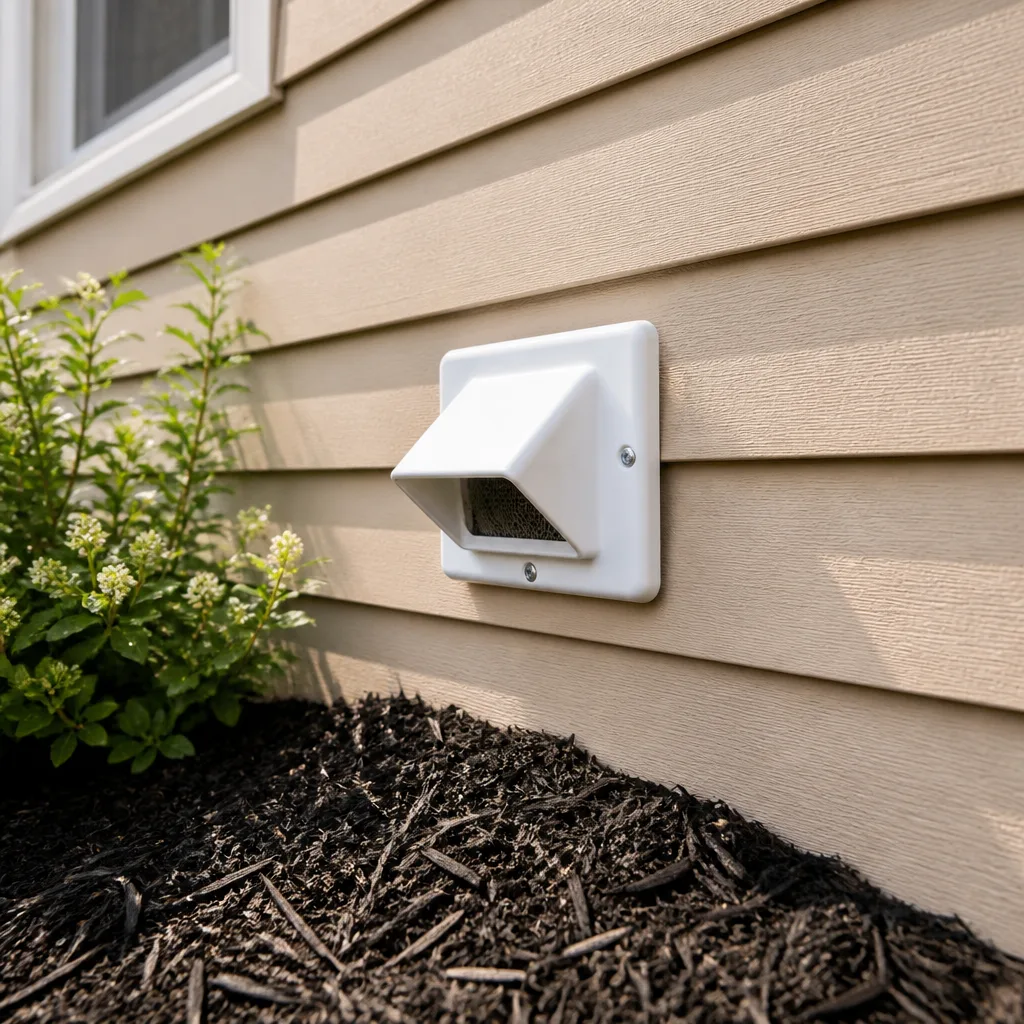 Dryer vent cleaning
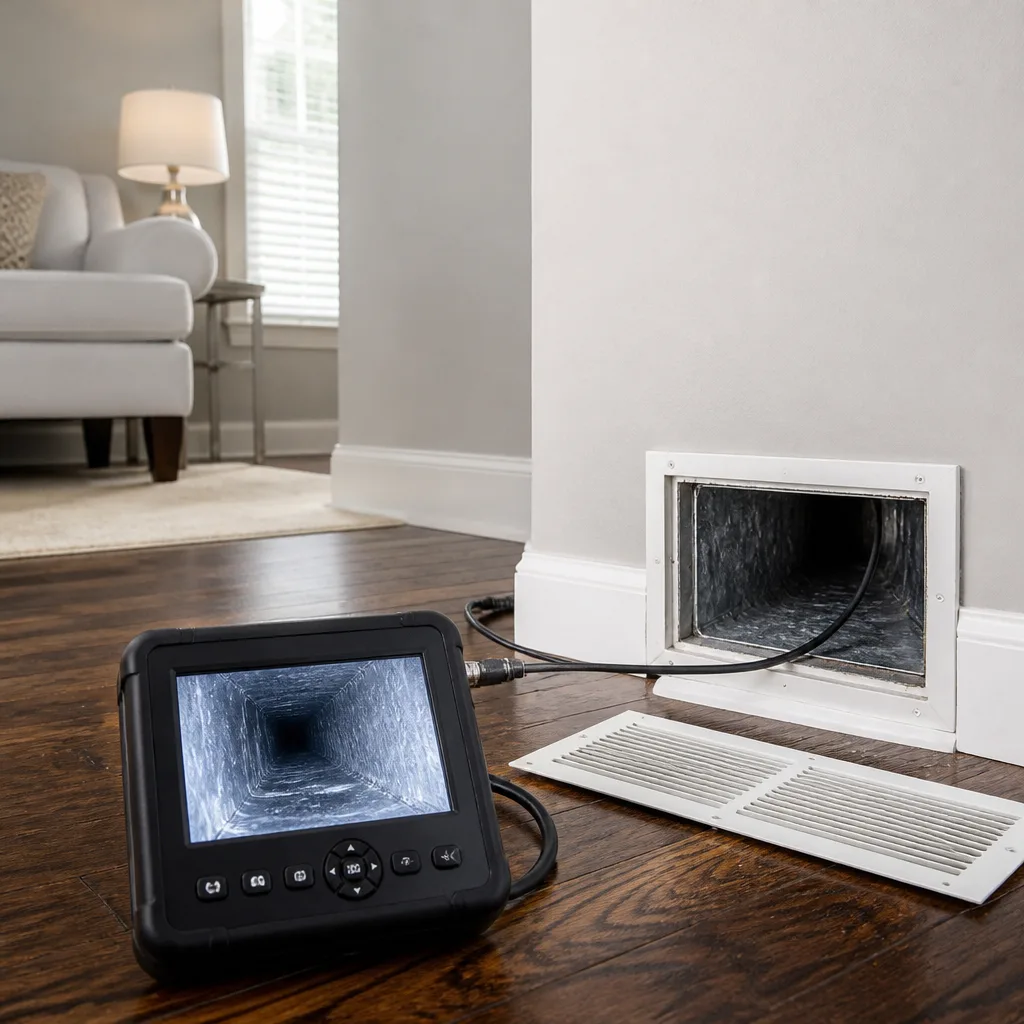 Camera inspection
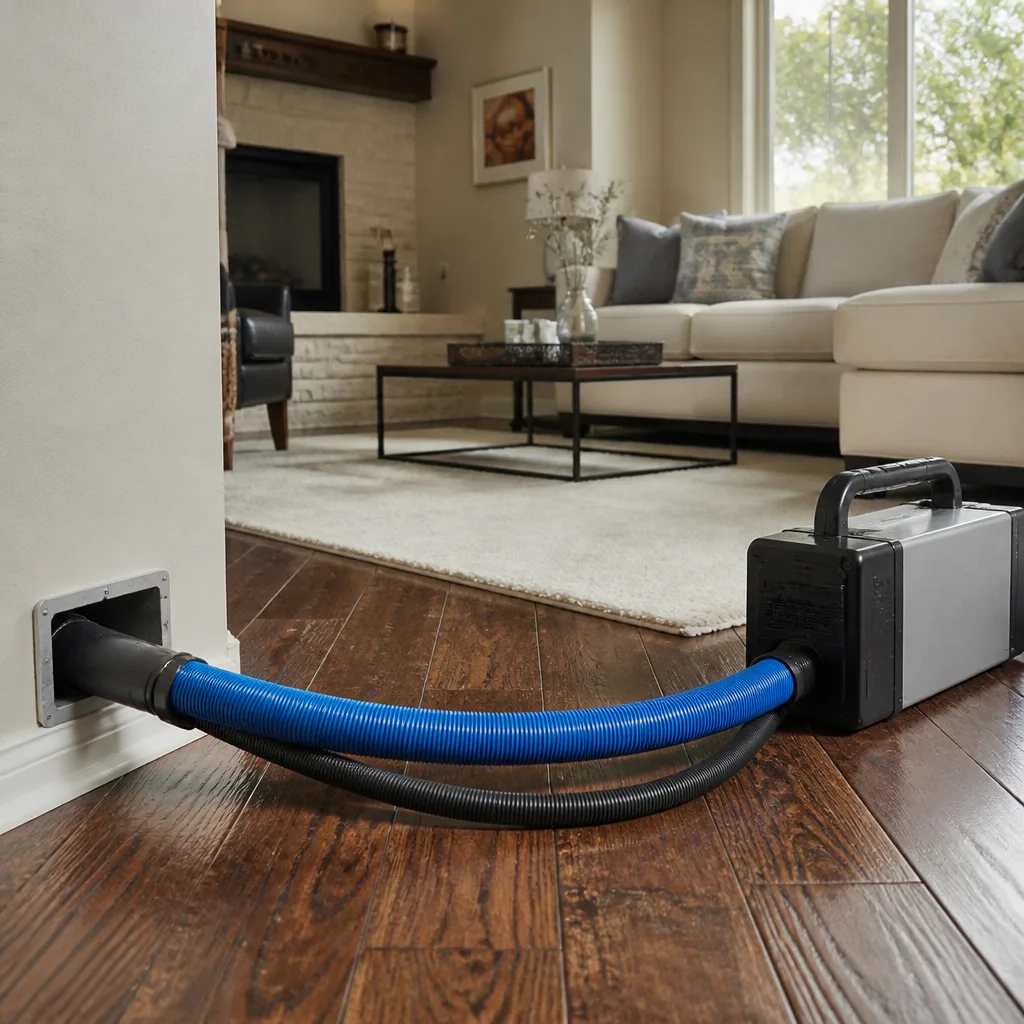 Sanitizing & deodorizing
Whole-system duct and dryer vent check with before-and-after photos - you see exactly what came out of your vents
That "$99 whole-house special" is a bait ad - the real number appears once they are in your hallway, or the "clean" is a shop-vac at the register. We photograph the inside of your ducts before and after instead.
DIY vs Professional Air Duct Cleaning: The Lakewood Homeowner’s Decision Guide
A $30 brush kit from a home improvement store and a shop vac can legitimately clean your registers and the first few inches of duct behind them. That part is real, and we won’t pretend otherwise. The problem is that the debris driving your air quality complaints is rarely sitting in those first few inches. It’s settled on duct walls further in, in the branches feeding individual rooms, and in the return-side runs where airflow is slowest. This guide lays out exactly where DIY stops working and professional equipment takes over, so Lakewood homeowners can decide what to handle themselves and what genuinely needs a specialist. By the end you’ll know which tasks belong on your own to-do list and which ones require professional equipment.
Quick Answer
DIY air duct cleaning in Lakewood is worth doing for surface-level maintenance: registers, return grilles, and the accessible duct you can actually reach. It cannot achieve source removal inside the duct system, because household vacuums don’t move enough air volume to pull debris off duct walls. Professional cleaning with rotary brushes and HEPA-filtration vacuum equipment reaches the whole system, and if a duct connection is broken or crushed, a repair-capable company fixes it on the same visit instead of just noting it.
Styles & brands we work with
- Whole-home duct cleaning
- Dryer vent cleaning
- Camera inspection
- Sanitizing & deodorizing
Table of Contents
- What DIY Duct Maintenance Can Realistically Accomplish
- Why Consumer Equipment Can’t Achieve Source Removal
- When DIY Attempts Make the Problem Worse
- The Honest Cost Comparison: DIY vs Professional
- The Hybrid Approach: What to Do Between Professional Cleanings
- Dryer Vent Cleaning: The One Job You Shouldn’t DIY
- Cleaning vs Repair: Two Different Jobs
- When to Call a Professional
What DIY Duct Maintenance Can Realistically Accomplish
Let’s start with what actually works. A homeowner with basic tools can meaningfully improve the conditions around the duct system, and that work isn’t wasted. It keeps dust from being pulled straight back into the air handler and it gives you a clear look at whether something bigger is going on.
Here’s a realistic DIY maintenance routine for a Lakewood home:
- Remove and wash the supply registers. Most residential registers pop out with a screwdriver or lift out of their frame. Soak them in warm soapy water, scrub the louvers with a soft brush, rinse, and let them dry fully before reinstalling.
- Vacuum the register boots. With the register off, reach in with a crevice tool on a shop vac and pull out the loose dust and debris sitting in the first few inches of the boot. This is the part you can genuinely reach.
- Clean the return grilles. The large return grille is usually the dustiest surface in the system because it’s the intake. Remove it, wash it, and vacuum the filter slot behind it.
- Replace the filter on schedule. A clogged filter starves the system and pushes dust past the filter into the ducts. Check it monthly during heavy-use months and replace it when it’s visibly loaded.
- Inspect accessible flex duct. Where ductwork runs exposed in a basement or crawlspace, look for crushed sections, disconnected joints, or sagging runs. Note anything you find rather than trying to fix it yourself.
That’s a solid afternoon’s work, and it’s genuinely worth doing. What it is not is duct cleaning. You’ve cleaned the mouth of the system, not the system.
Why Consumer Equipment Can’t Achieve Source Removal
This is the physical reason behind everything else in this guide. Professional duct cleaning depends on something called negative pressure: the vacuum pulls a strong, sustained airflow through the duct run while a rotary brush agitates the debris off the walls. The debris goes into the vacuum, not into your living room.
The key variable is airflow volume, measured in cubic feet per minute (CFM). A typical household shop vac moves somewhere in the range of 100 to 200 CFM, and it loses suction fast once a hose is attached and the run gets long. Commercial duct cleaning systems are built around much higher airflow and, just as importantly, around HEPA filtration that traps fine particulate instead of blowing it back out the exhaust. Consumer vacuums generally lack that filtration, so anything they do dislodge tends to end up airborne in the room.
There’s a second limit: reach. Debris doesn’t sit neatly at the opening of a duct. It settles along the walls of long runs, behind elbows, and in branch lines that no consumer tool can get into. The equipment we use – Rotobrush rotary-brush systems with Nikro HEPA-filtration vacuum equipment – is purpose-built for exactly that geometry. The rotary brush does the dislodging and the vacuum captures what the brush releases, at the source.
So the honest summary is this: DIY duct cleaning isn’t dangerous. It’s just structurally limited. No amount of effort with a shop vac changes the CFM math.
When DIY Attempts Make the Problem Worse
Most DIY duct work is harmless. Sometimes it backfires, and it’s worth knowing the specific situations where putting the tool down is the smarter move.
- When there’s visible mold or a musty smell. Disturbing a mold colony with a shop vac can release spores into the living space, and a consumer vacuum won’t capture them. Contamination at that level calls for remediation-grade equipment – the kind of capability behind the Abatement Technologies equipment we use – not a household vacuum.
- When flex duct connections are already loose. Flex duct joints are taped and often fragile. Pushing a brush or vacuum hose into a run can pull a joint apart, and now you have a duct blowing conditioned air into a crawlspace instead of into a bedroom.
- When you’re pushing rather than pulling. A shop vac without a proper seal at the register can actually shove loose debris deeper into the run, where it settles in a place nobody can reach.
- When the duct is crushed or collapsed. Cleaning a crushed run doesn’t help; it needs to be repaired. This is the line between cleaning and repair, and it’s the reason we offer air duct repair as a standalone service.
- When the system is old and heavily contaminated. A system that has never been cleaned has debris that’s physically bonded to duct walls. Agitating it without proper capture just redistributes it.
If you’re unsure which category your home falls into, the safe move is to leave the deep work alone and have someone look at it.
The Honest Cost Comparison: DIY vs Professional
The DIY-versus-professional cost math is usually done wrong, because it compares the price of a brush kit to the price of a full service and stops there. A fair comparison accounts for supplies, time, and what each approach actually accomplishes.
| Approach | What You Spend | What You Get |
|---|---|---|
| DIY register and grille cleaning | Supplies plus a few hours of your time | Clean registers, clean boots, clean return grille. Dust reduction at the system’s openings. |
| DIY deep cleaning attempt | Supplies plus a full day, plus risk of damage | Partial surface work with no reliable containment of what gets dislodged. |
| Professional whole-system cleaning | A written per-job estimate agreed before work starts | Source removal across the full duct system with HEPA capture, plus before-and-after photos. |
| Professional cleaning plus repair | A written per-job estimate agreed before work starts | Everything above, plus diagnosis and repair of crushed or disconnected ductwork on the same visit. |
Here’s where the break-even calculation actually lands for a typical Lakewood home. If your ducts are lightly dusty and have never been deep cleaned, DIY maintenance is a reasonable ongoing habit and it may be all you need for a while. If you’ve just bought a house, just had an HVAC system installed, or you’re dealing with allergy symptoms that spike when the heat or AC kicks on, DIY maintenance won’t touch the source, and you’ll spend the money twice – once on supplies, once on the professional job you eventually need anyway.
One more point on cost, because it’s the hesitation we hear most. This industry has a reputation problem: a low teaser price that becomes a much larger invoice once the technician is on site. We work the other way around. One flat price per system, agreed before work starts, no per-vent pricing, and before-and-after photos of your own ducts so you can see what changed.
The Hybrid Approach: What to Do Between Professional Cleanings
This is the approach we’d recommend to most Lakewood homeowners, and it’s the one that saves the most money over time. Have the system professionally cleaned to a real baseline, then maintain it yourself between visits so the interval stretches out.
Between professional cleanings, keep up these habits:
- Wash the registers twice a year. Spring and fall are natural markers, tied to the heating and cooling switchover.
- Vacuum return grilles monthly during heavy-use months. The return side collects dust fastest.
- Replace the filter on the manufacturer’s schedule, and check it monthly. A loaded filter is the single most common cause of dust bypassing into the ducts.
- Keep return grilles clear of furniture and rugs. Blocked returns force the system to pull harder and stir up more dust.
- Watch for new smells or visible dust streaks at registers. Either one is a signal to schedule an inspection rather than clean harder yourself.
- Stay ahead of the dryer vent. That’s a separate system with its own risks, covered below.
Done consistently, that routine keeps a professionally cleaned system cleaner for longer, and it means the next professional visit is maintaining a good baseline instead of recovering a neglected one.
Dryer Vent Cleaning: The One Job You Shouldn’t DIY
Air ducts are about air quality. The dryer vent is about fire. Lint is highly combustible, and a vent packed with it is a genuine danger to the house. This is the one maintenance task in this guide where the DIY calculation doesn’t favor the homeowner.
The reason is access. A dryer vent run goes from the back of the appliance through a wall or floor, through elbows, and out to an exterior hood. The lint that matters collects in the elbows and along the far end of the run, in exactly the places a homeowner with a hand tool can’t effectively reach. Consumer vent brushes exist, but they’re flimsy and they frequently dislodge lint without removing it, leaving it packed tighter somewhere further along.
Professional dryer vent cleaning uses equipment that pulls the lint out of the full run, not just the first stretch. We treat it as a core service rather than an upsell afterthought, and we’d rather a Lakewood homeowner learn this from a guide than from a fire department.
Signs the vent needs attention: the dryer takes noticeably longer to finish a load, the top of the dryer runs hot to the touch, there’s a musty or burnt smell in the laundry area, or the exterior vent flap doesn’t open fully when the dryer runs. Any of those means stop using the dryer until it’s cleaned.
Cleaning vs Repair: Two Different Jobs
One thing most comparison guides skip: a lot of what gets called “dirty ducts” is actually damaged ducts. Crushed flex runs, disconnected joints, and holes in the duct surface all reduce airflow and pull air from places you don’t want – a crawlspace, an attic, a wall cavity. Cleaning that system without repairing it fixes nothing.
That’s why we offer air duct repair alongside air duct cleaning. A technician can diagnose a compromised run and fix it on the same visit. Companies that only clean have to note the problem and refer it out, which means a second appointment, a second company, and a system sitting damaged in the meantime.
We also service and support systems built on platforms homeowners already recognize: Honeywell, Aprilaire, and Guardsman. If your ventilation system runs on one of those, you have a single point of contact for the whole thing rather than a string of specialists each handling one component.
For homeowners in Lakewood, this matters more than it might elsewhere. The housing stock here spans a wide age range, and that means duct systems in very different conditions: older rigid metal runs in some neighborhoods, retrofitted flex in others. A cleaning-only approach assumes the ducts are structurally fine. A repair-capable approach doesn’t assume anything.
When to Call a Professional
Call a professional when the problem is inside the system rather than at its edges. Specifically: you see visible mold or smell something musty when the system runs; a duct is crushed, disconnected, or making noise; allergy or respiratory symptoms spike when the HVAC kicks on; you’ve just moved in and don’t know the duct history; a new HVAC system has just been installed and the old ducts need assessing; or the dryer is running hot or taking too long.
We want to be clear about where we fit. Some of this work is genuinely DIY, and we’ll say so. When it isn’t – when it’s source removal, contamination, or structural duct damage – professional equipment is the only thing that finishes the job. Our technicians have up to 9 years of experience with these systems.
Lakewood Duct Cleaning offers free estimates in Lakewood. Call (844) 914-0778. We answer 24/7. Fast dispatch from 7am to 7pm, Sunday through Friday.
Common Mistakes to Avoid
- Cleaning the registers and calling the ducts done. Registers are the visible 5% of the system. Cleaning them is worth doing, but it doesn’t reduce the debris load further in.
- Using a shop vac with no HEPA filtration on a dusty run. Without proper capture, you move dust from the duct into the room’s air, which is the opposite of the goal.
- Pushing a brush blindly into flex duct. Flex runs are fragile and taped at the joints. A forced brush can pull a connection apart and create an air leak that costs more to fix than the cleaning would have.
- Ignoring a musty smell and cleaning anyway. A persistent musty smell usually indicates moisture and biological growth. Agitating that without remediation-grade capture spreads the problem.
- Assuming a crushed duct will clean up. A collapsed run restricts airflow no matter how clean it is. It needs repair, not cleaning.
- Treating the dryer vent as a minor extra. It’s the one item in this guide with a real fire consequence attached, and it deserves its own professional attention.
- Accepting a low teaser price without a written scope. Ask what’s included, whether the price is per system or per vent, and whether you’ll get documentation of the work. A legitimate provider answers all three without hesitation.
See the difference
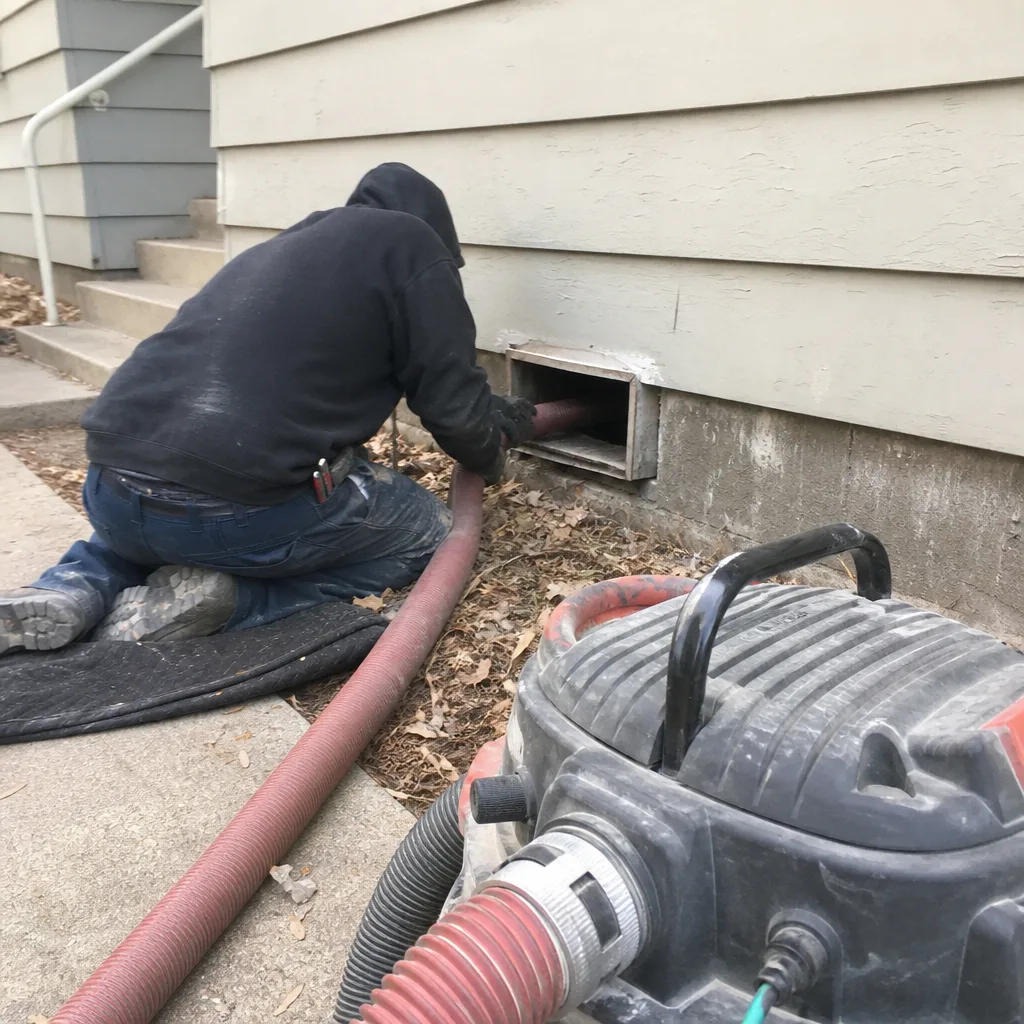 Before
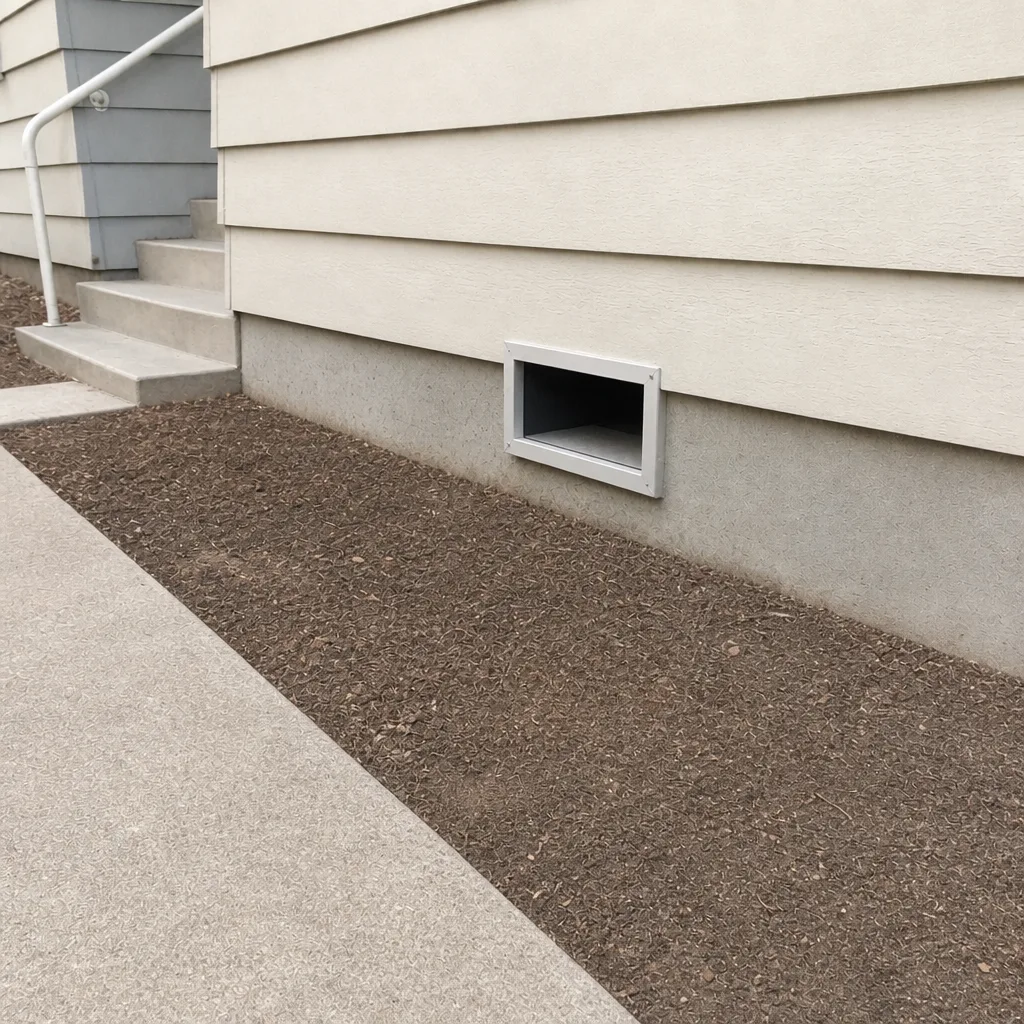 After
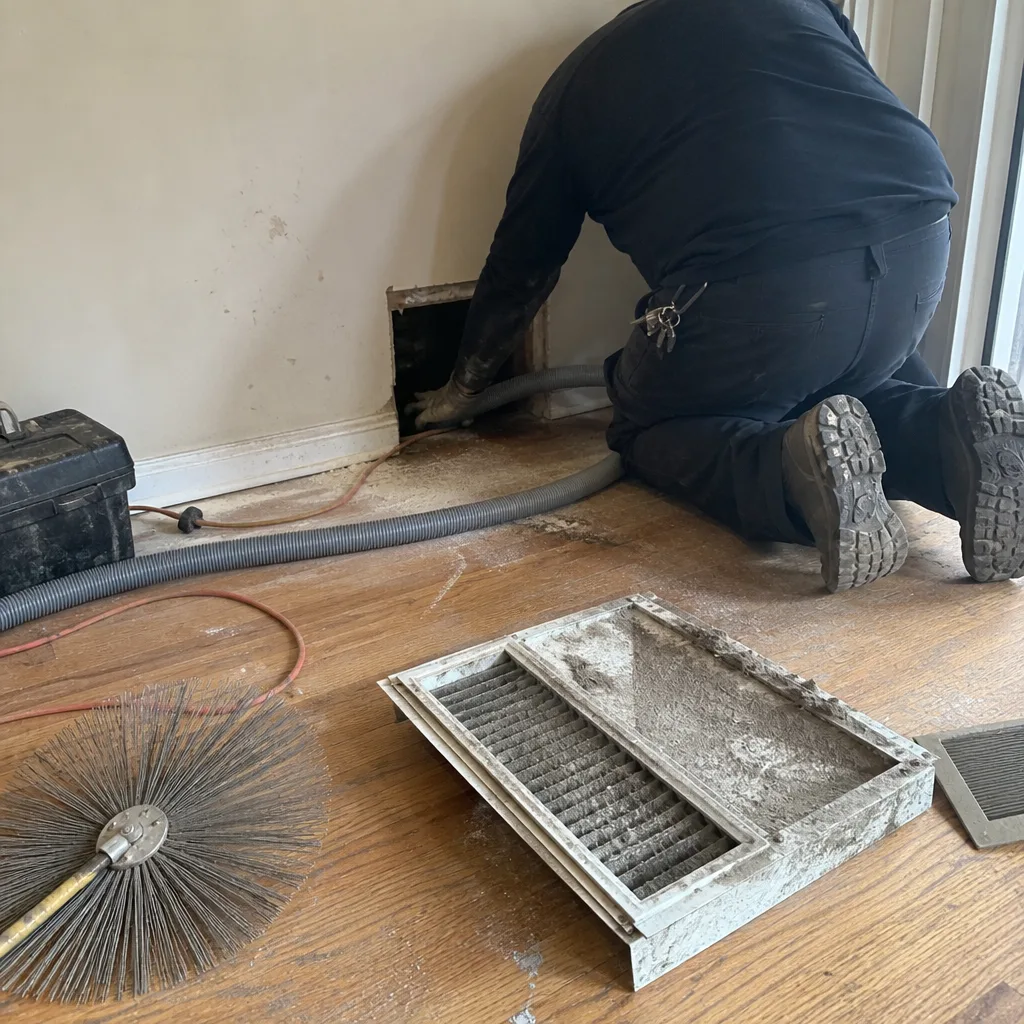 Before
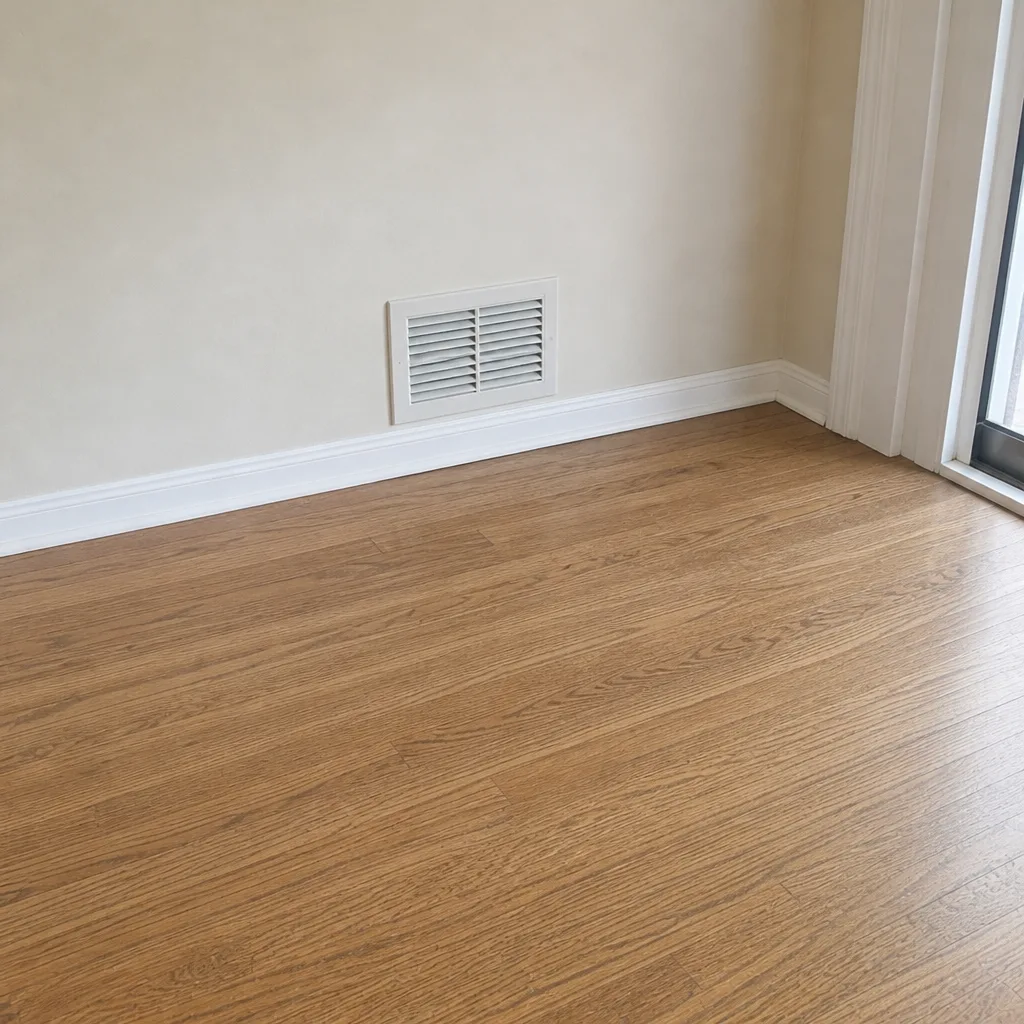 After
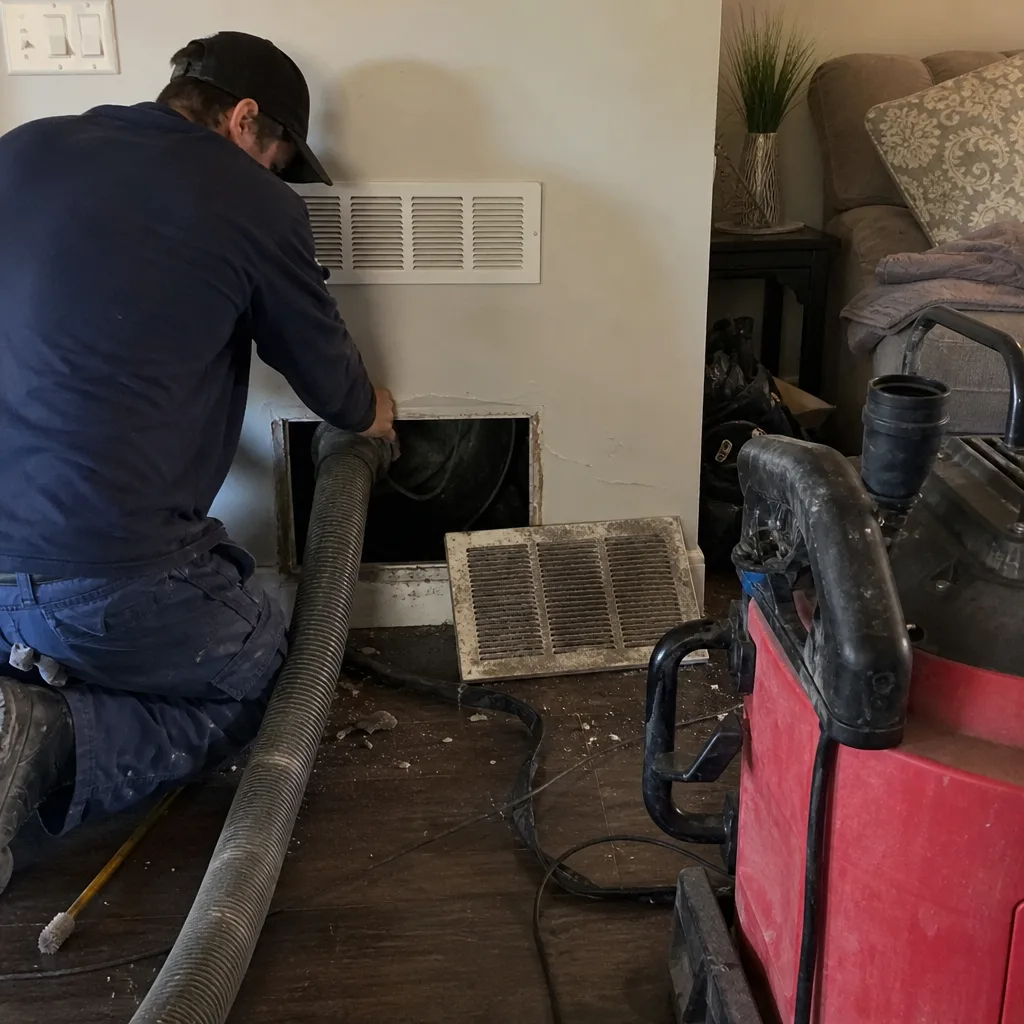 Before
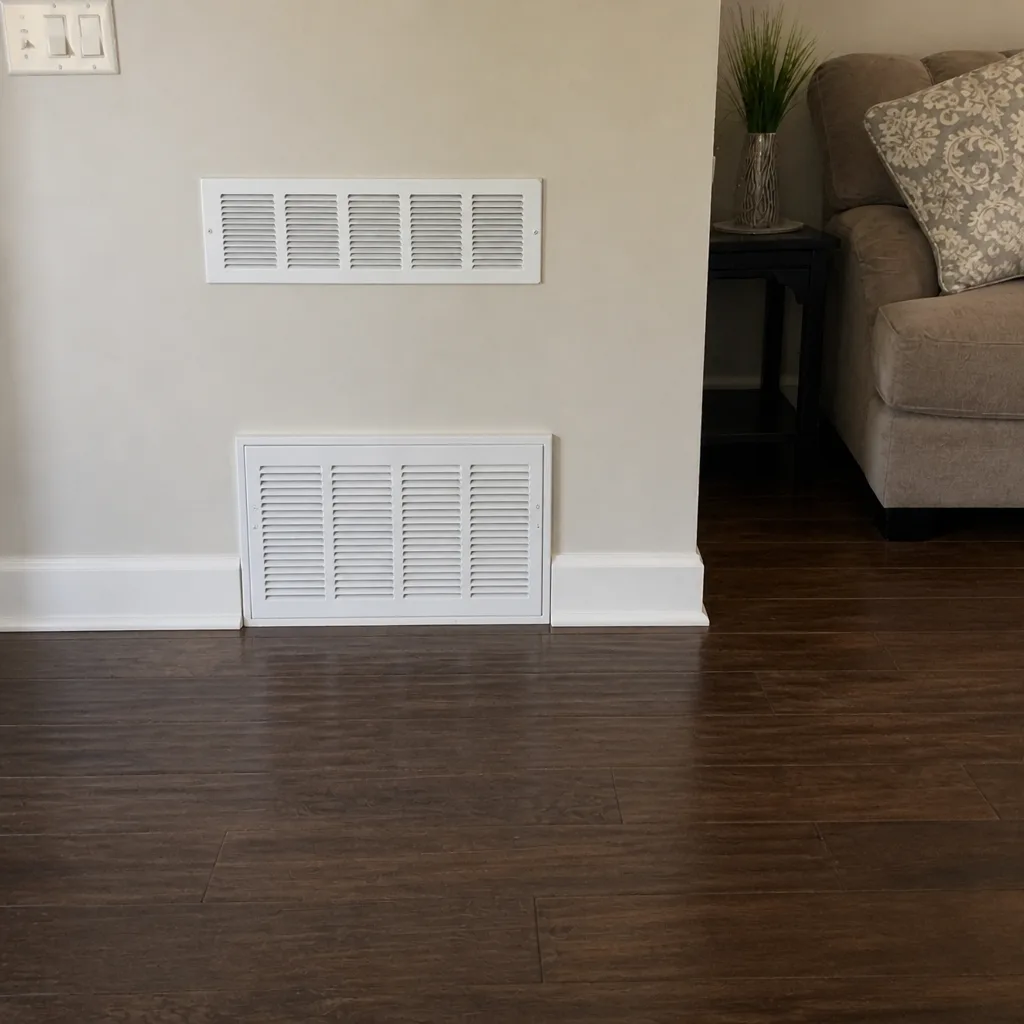 After
Frequently Asked Questions
You can clean the registers, return grilles, and the first few inches of duct behind them, and that’s worth doing. You can’t achieve source removal inside the duct system with consumer equipment, because household vacuums don’t move enough airflow to pull debris off duct walls or capture fine particulate.
It depends on the home, not on a fixed calendar. Homes with pets, recent renovations, allergy sufferers, or a recent move tend to need it sooner; a clean system with good filtration and regular DIY maintenance can go considerably longer between professional cleanings. Call (844) 914-0778 for an exact recommendation for your system.
Usually because the scope is smaller or the equipment is lighter. A low quote often covers register cleaning only, or uses equipment that agitates debris without HEPA capture. We price one flat rate per system, agreed before work starts, so the number you’re quoted is the number you pay. Call (844) 914-0778 for a free estimate.
Ask for before-and-after photos of your own ducts, not stock images. That’s what we provide, along with a written scope and a flat per-system price agreed in advance. Call (844) 914-0778 to schedule.
Not in most cases. It becomes a problem when mold is present, when flex duct joints are fragile, or when debris gets pushed deeper instead of removed. In those situations, stop and have the system assessed.
Cleaning removes debris from inside intact ducts. Repair fixes ducts that are crushed, disconnected, or leaking so the system can actually deliver air where it’s supposed to. Many systems need both, which is why we do both.
The Bottom Line
DIY duct maintenance is real, and it’s worth the afternoon: clean registers, clean the return grille, replace the filter on schedule, and inspect what you can reach. Those habits keep a clean system cleaner and stretch the interval between professional visits. What DIY can’t do is source removal, because the CFM math doesn’t work in a household vacuum’s favor. For deep cleaning, contamination, or damaged ductwork, professional equipment and a repair-capable technician are the difference between a job finished and a job deferred. Do the easy maintenance. Call for the rest.
Schedule Your Free Estimate
If this guide has clarified where your own maintenance stops and professional work begins, we’re glad. Lakewood Duct Cleaning provides dryer vent cleaning, whole-system duct cleaning, and duct repair across the area. You’ll get a written per-system price before work starts, and before-and-after photos of your own ducts when it’s done. Call (844) 914-0778. We answer 24/7. Fast dispatch from 7am to 7pm, Sunday through Friday. Estimates are free, and the Lakewood Duct Cleaning team is happy to look at your system and tell you honestly whether it needs work.
Written by the team at Lakewood Duct Cleaning.